
In-person hackathon use case: the EP PerMed Hackathon 2026
Held in Oostende on 3–4 March 2026, the inaugural EP PerMed Hackathon brought together over 100 innovators, researchers, and professionals representing 17 countries to collaborate on advancing personalised medicine.
Throughout the two-day innovation sprint, participants worked in teams to design and refine cutting-edge concepts and solution-driven ideas to shape the future of healthcare.
In this blog post, we take a deep dive into the event and explore how our hackathon agency helped EP PerMed and the Flemish Government organize the hackathon!
Table of contents
- Why did people join?
- Who joined?
- Participation figures
- The stakeholders
- The challenge to be solved
- Hackathon timeline
- Winning teams
- Prizes
- Testimonials and quotes from participants
- Conclusion
1. Why did people join?
- 🧬Participants joined the hackathon driven by a strong interest in being at the forefront of innovation in personalised medicine, where new approaches are reshaping how healthcare is understood and delivered.
- 🤝Many were eager to connect and exchange ideas with leading experts and mentors, using the opportunity to expand their professional networks within a highly specialised community.
- 🧠The event also offered a unique hands-on experience in a dynamic, interdisciplinary setting, allowing participants to collaborate across fields and translate ideas into concrete solutions.
- 🚀For many, the prospect of showcasing their work on platforms with broad visibility was a key motivation, offering a chance to amplify the reach and impact of their ideas beyond the event itself.
- 🏆 In addition, participants were drawn by the opportunity to receive recognition and visibility through EP PerMed channels, providing further credibility and exposure for their work and contributions.
2. Who joined?
Participants came from a wide range of backgrounds, each bringing a distinct perspective to the hackathon!
- 💡Many were innovators driven by a desire to turn ideas and inspiration into tangible, high-impact solutions that can make a real difference in personalised medicine.
- ⚙️Others joined as engineers with a strong passion for applying and integrating technology into healthcare, exploring how digital tools and data-driven approaches can advance personalised treatment pathways.
- 🩺Clinicians were also present, seeking opportunities to collaborate on the next generation of healthcare advancements and bridge the gap between medical practice and innovation.
- 📈The event further attracted entrepreneurs eager to connect with like-minded visionaries and explore new opportunities for collaboration and impact.
- 🔬Alongside them, researchers participated with the ambition of translating their scientific insights into real-world healthcare applications, ensuring that academic knowledge could directly contribute to solving pressing clinical challenges.

3. Participation figures
The hackathon brought together over 100 participants from 17 different countries!
33 teams registered, but only 18 have been selected to join the event in Ostend.
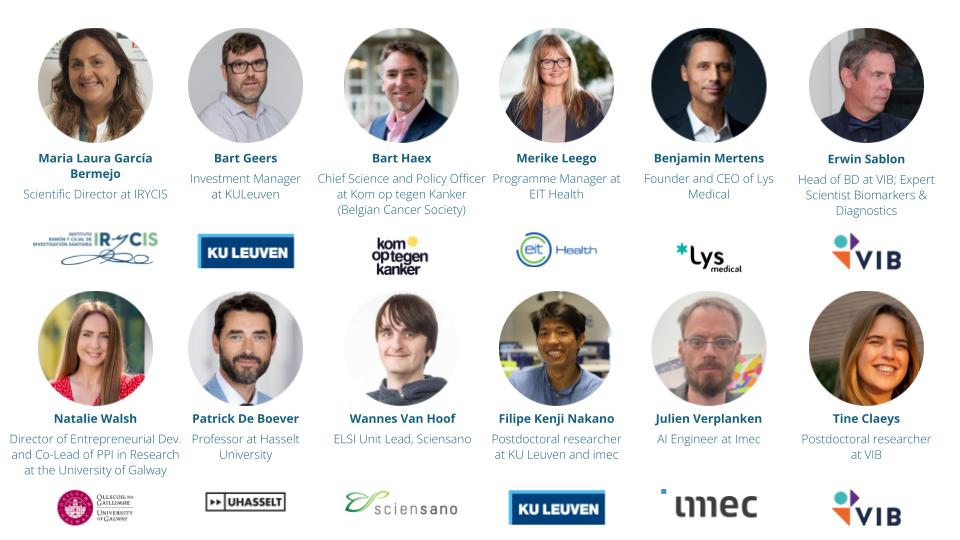
The teams were coached and supported by 12 mentors from all over Europe…
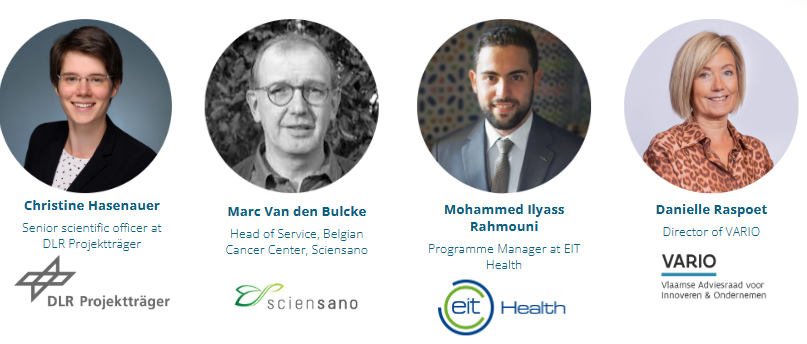
…and were evaluated by 4 high-caliber Jury Members from top companies and institutions
4. The stakeholders
The hackathon was organized by Vlaamse Overheid (Flemish Government), together with other strategic partners such as Vinnova and EIT Health.
5. The challenge to be solved
The EP PerMed Hackathon challenged participants to address a central problem in the field of personalised medicine: designing and applying innovative healthcare strategies and technologies based on the use of non-invasive biomarkers.
Within this context, biomarkers were understood as biological signals that indicate the presence, progression, or response to a disease or treatment.
These could include measurable elements such as molecules found in blood, breath, urine, or saliva, as well as digital and behavioural data sources like speech patterns, wearable device outputs, or information collected through mobile health applications.
Teams were encouraged to develop forward-thinking solutions leveraging these types of non-invasive biomarkers across a range of healthcare applications.
This included, among other areas:
- improving the monitoring of disease progression to enable earlier and more precise patient tracking
- enhancing diagnostics and companion diagnostics to support more accurate and patient-specific treatment decisions
- enabling earlier assessment of treatment efficacy and potential toxicity to increase both safety and effectiveness of therapies
- exploring approaches for patient stratification, aiming to identify meaningful subgroups of patients that could benefit from tailored interventions and ultimately lead to more optimised clinical outcomes.
6. Hackathon timeline
The hackathon journey started in November 2025 with the opening of registrations and early team formation around shared ideas and expertise.
After a collaborative preparation phase, teams submitted a one-page project summary in February 2026, which was used to select and confirm participants for the next stage.
Following an introductory session to align on the challenge and format, the hackathon officially kicked off on 3 March 2026, launching an intensive sprint where teams developed and refined their solutions.
Final submissions, presentations, and supporting materials were delivered on 4 March, leading into the live pitching session and concluding award ceremony, where the winning teams were announced.
Below, you can explore the complete hackathon timeline:
| 🟢 Registrations and team formation open - November |
| ❌ Registration close and 📃Deliverable 1 // One-Page Summary - 8 February @ 23:59 |
| 🧩 Teams selection and confirmation starts - 9 February @ 00:00 |
| 🧩 Teams selection and confirmation ends - 10 February @ 18:00 |
| 🎙️ Introductory live session - 19 February @ 15:00 |
| 🧪 Hackathon starts - 3 March @ 09:00 |
| 🗃️ Deliverable 2 // Presentation - 3 March @ 19:00 |
| ⬆️ Upload your pitch slides [OPTIONAL] - 4 March @ 10:00 |
| 🎇 Deliverable 3 ️[OPTIONAL] // Supporting evidence link - 4 March @ 10:30 |
| 🎤 Final Pitches - 4 March @ 10:30 |
| 🎉 Award Ceremony - 4 March @ 14:30 |
7. Winning teams
As mentioned, a total of 18 teams participated, but only 3 came out on top!
Here are the details
3rd place
Team name: trAIlblazers4
Idea name: SynapSight
Idea description:
| SynapSight reframes adherence as an opportunity for continuous brain-health sensing. Delivered as a drop-in module for medication trackers, it gates each dose check-in behind a 10-second, gamified eye-movement task. Using iPhone-class 3D sensors, Neuro-Vital extracts high-fidelity oculometrics—fixations, saccades, inhibitory-control performance, and, when available, pupil metrics. Lightweight, within-person machine-learning models compare each day to a personalized baseline, producing a dynamic “neuro-adherence risk” trajectory. |
2nd place
Team name: SPArSE
Idea name: AI-Driven Stratification for Immunotherapy in NSCLC
Idea description:
| The SPArSE consortium aims to improve immunotherapy outcomes for patients with stage II-IV non-small cell lung cancer (NSCLC) by developing a robust, multi-omics-based predictive model that improves the accuracy of the current models for the identification of responders to immune checkpoint inhibitors (ICI). Through the integration of clinicopathological data, proteomics, transcriptomics, and advanced machine learning, the project seeks to enhance treatment stratification and identify new targets for future therapies, ultimately contributing to more personalized and effective cancer care. |
1st place
Team name: NEUROSIGHT
Idea name: The eye as a window to monitor Multiple Sclerosis progression
Idea description:
NeuroSight transforms Multiple Sclerosis care by utilizing the eye as a real-time biomarker for brain health. Current annual brain scan MRIs often miss "silent" disease progression. Our AI solution analyzes frequent, non-invasive Optical Coherence Tomography scans to quantify retinal neurodegeneration. By predicting disability progression and therapy failure months before clinical symptoms arise, NeuroSight enables neurologists to optimize treatments proactively. We move MS management from reactive snapshots to continuous, personalized observation, saving time, costs, and ultimately, brain tissue. |
8. Prizes
The hackathon prizes included over €30,000 worth of prizes and opportunities!
The 3 winning teams were awarded from a pool of prizes, including a spotlight at future EP PerMed events, enjoy visibility across EP PerMed communication channels, travel reimbursements, and invitations to participate in the Venture Creator Programme, Summer Schools, and even in situ visits, opening doors to further opportunities!
9. Testimonials and quotes from participants
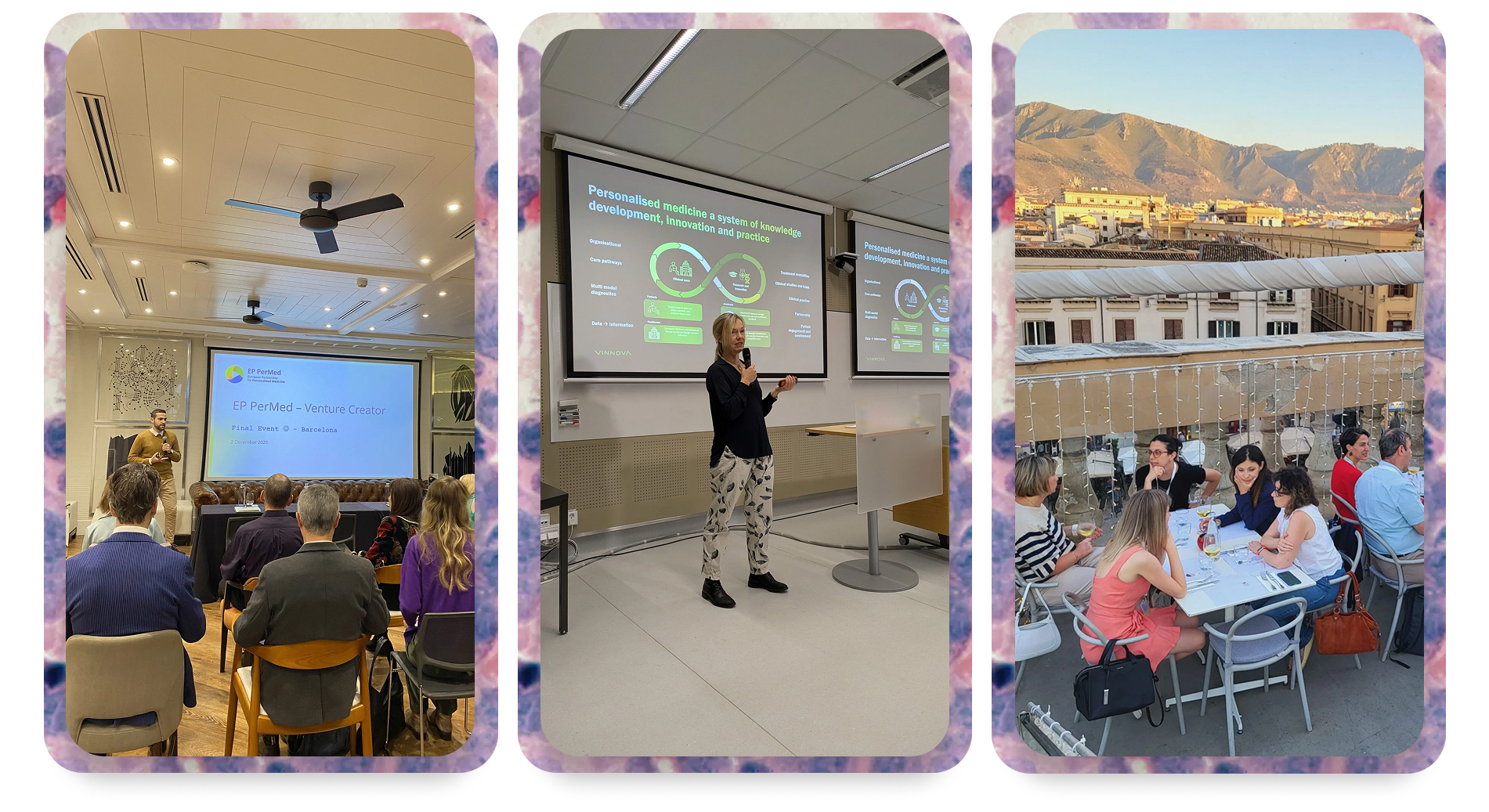
One of the strongest indicators of a successful hackathon is the impact it leaves on its participants.
Beyond the final pitches and awards, the EP PerMed Hackathon created an environment where researchers, entrepreneurs, clinicians, and innovators could collaborate across disciplines, challenge their ideas, and accelerate the development of promising personalised medicine solutions.
Throughout the event, participants highlighted the value of the international collaboration, expert mentoring, and hands-on feedback they received during the hackathon.
Many teams refined not only their technical concepts, but also their market positioning, regulatory understanding, and long-term implementation strategies.
Below are some reflections and testimonials shared by participants following the hackathon experience:
"The EP PerMed Hackathon in Ostend, from March 2nd to March 4th, provided me with a high-energy environment that accelerated both our NeuroSight concept development and strategic positioning. Thanks to the EP PerMed matchmaking, I connected with a strong multidisciplinary team of experts from Greece, Sweden, Germany, and Belgium. Through structured interactions with mentors and peers, we have refined our focus from clinical use toward broader applications in pharma and the European Health Data Space, shaping NeuroSight into a scalable, data-driven solution for proactive MS monitoring."
Dirk Valkenborg, team Neurosight (Professor at University of Hasselt, Belgium)
"As a Co-Founder of Astrosit Technology, I had a highly valuable experience during the EP PerMed hackathon. We received mentorship from experts across at least four to five different disciplines, which significantly helped us identify gaps in our project—especially regarding certification requirements and regulatory pathways for entering the European market. Understanding which certifications are critical was particularly insightful for our next steps. We also stayed in close contact with other teams, even collaborating and supporting each other before the hackathon officially began. Overall, it was an engaging, collaborative, and truly enjoyable experience for us."
Yasin Karaca, team Astrosit (founder of Astrosit Technology, Turkey)
"The EP PerMed Hackathon was an incredibly valuable experience, bringing together diverse expertise and enabling truly collaborative problem-solving. As a team, we were able to significantly advance our concept, shaping DIA-AID into a more concrete and clinically relevant solution with real potential beyond the hackathon. The interaction with mentors and participants played a key role in challenging our assumptions and strengthening both our approach and vision."
Tobias Larsson, team DIA-AID (co-founder of DIA-AID, Sweden)
"Connecting with mentors and peers during Hackathon clarified how to translate an idea into a viable path forward, particularly by focusing on market fit and investment readiness. I learned that a strong concept alone is insufficient without a clear strategy for real-world implementation. Teamwork significantly strengthened the process, with each member contributing distinct perspectives and skills that improved both efficiency and the overall quality of the project. While the idea itself progressed, the most significant advancement was understanding how to position it for investors and bring it toward commercialization."
Orçun Taylan, team PhysioAtlas (PhD candidate at KU Leuven, Belgium)
10. Conclusion
The EP PerMed Hackathon 2026 is a strong example of how a professionally designed and managed event, delivered by an experienced hackathon agency, can accelerate collaboration and real-world impact in highly complex fields such as personalised medicine.
By working with an expert hackathon agency, EP PerMed was able to bring together more than 100 participants from across Europe and beyond, ensuring a smooth end-to-end experience: from registration and team formation to mentoring, submissions, live sessions, and final pitching.
This structured approach enabled researchers, clinicians, entrepreneurs, and innovators to focus fully on solving challenges rather than logistics.
Over the course of the event in Oostende, participants explored the potential of non-invasive biomarkers and developed data-driven healthcare solutions aimed at improving diagnosis, monitoring, and treatment strategies.
The hackathon format, when properly designed and executed, proved essential in turning early-stage ideas into refined, high-potential concepts in just two days.
Beyond the solutions themselves, the EP PerMed Hackathon also strengthened cross-border collaboration, connecting academic institutions, industry stakeholders, and public organisations through a shared innovation framework.
Teams benefited not only from technical development but also from guidance on regulatory pathways, market fit, and long-term scalability.
At Eventornado, we act as a dedicated hackathon agency, supporting organisations in designing, building, and running high-impact hackathons and innovation challenges.
From strategic hackathon design and platform setup to participant management, live event coordination, and post-event reporting, we provide the full operational backbone needed to deliver successful innovation programs at scale.
The EP PerMed Hackathon 2026 highlights how a specialised hackathon agency can transform complex scientific challenges into structured, engaging, and outcome-driven innovation experiences.
If you are looking for a hackathon agency to organise your next innovation challenge or corporate hackathon, get in touch today!


Are you looking to run a hackathon on Eventornado?
Request a demo, and we'll have you set-up in no time.
Request a Demo