

What is the structure of a hackathon?
A well-structured hackathon must entail the following phases:
- Hackathon’s goal definition
- Registration, team formation, and hackathon platform flow
- Outreach campaign design
- Hackathon’s deliverables definition: the Hack Guide
- Ideation and hackathon preparation live sessions
- Mentoring structure setup
- Evaluation process definition
- Awards ceremony hosting
First things first, let’s understand how to define the main hackathon goal:
1. Hackathon’s goal definition
Before engaging in any planning and event design activity, we must define the main hackathon’s goal.
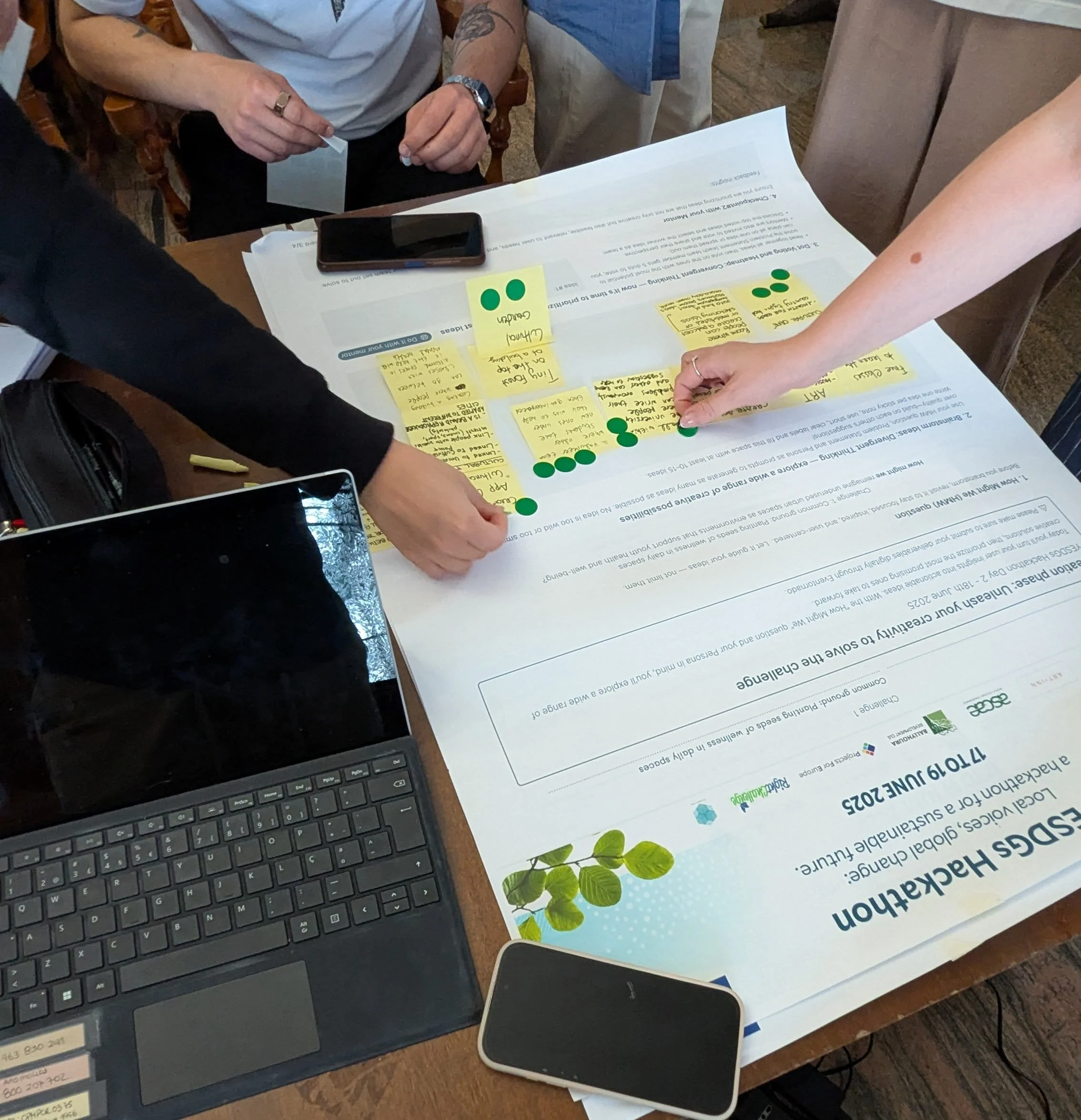
It’s a best practice to organize a round table with all the hackathon stakeholders to clearly define the problem statement that we would like to solve through the hackathon.
Many approaches can be adopted to perform this task in case the hackathon problem statement is not already clearly defined or if it falls under the “wicked problems” category.
One of them is the problem discovery phase of the design thinking methodology.
This is the moment when we all sit down and fully converge on the requirements, needs, and targets.
Ideally, once the meeting doors are closed, the totality of the hackathon stakeholders should now have a clear vision of who does what, when, and how, together with a crystal clear definition of the macro hackathon goal and the targeted audience.
2. Registration, team formation, and hackathon platform flow
The first outcome of this phase is the definition of the registration form.
The form fields depend on the hackathon goal and type: do we want to collect as much data as possible to gather information about the audience interested in our hackathon/brand/product? This must surely be considered in external hackathons.
Or do we already have a clearly defined targeted audience in mind, and we aim to maximise registrations? This could be the case of internal hackathons, where the audience is the employees, the partners, and the company’s ecosystem members.
The choices we make here have dependencies on other project tasks.
For example, a simple registration form could facilitate the tasks of the marketing team performing the outreach campaign.
UX and web design can play a crucial part if you plan to land people on a dedicated hackathon website.
We talked about it here.
About team formation: do we want specific skills in each team, or do we want to keep it as open as possible?
All these considerations must be taken into account while setting up the participants’ onboarding flow, which ideally will be hosted on a specialised hackathon platform.
Better centralising everything and avoiding using multiple tools for the same event.
3. Outreach campaign design
*Skip this article section in case you have an internal hackathon in mind.
After defining the hackathon goal and its audience in the previous steps, we need to make sure we address all the possible channels where we can run a holistic outreach campaign.

There’s no magic formula for this task, but there must be a magic team performing the campaign.
Every outreach campaign set-up depends on many factors, such as:
- The extension of the stakeholders’ network and communities to be leveraged
- The social media presence
- The budget that can be allocated to paid ads
- The chance to directly invite already-known audiences
Again, this must be approached holistically and with an open mind.
Think about promoting the hackathon in newspapers, external blogs, and even on TV, on the news if your network is wide enough.
4. Hackathon’s deliverables definition: the Hack Guide
Before the hackathon starts, the hackathon participants should have a very clear idea of what we expect them to submit before the hackathon ends: the deliverables.
It is highly recommended to create a hack guide for participants, providing guidelines on our expectations.
The document should be dynamic and hosted online.
It should provide the deliverables’ templates for the teams to download and have a predefined and structured file to work on.
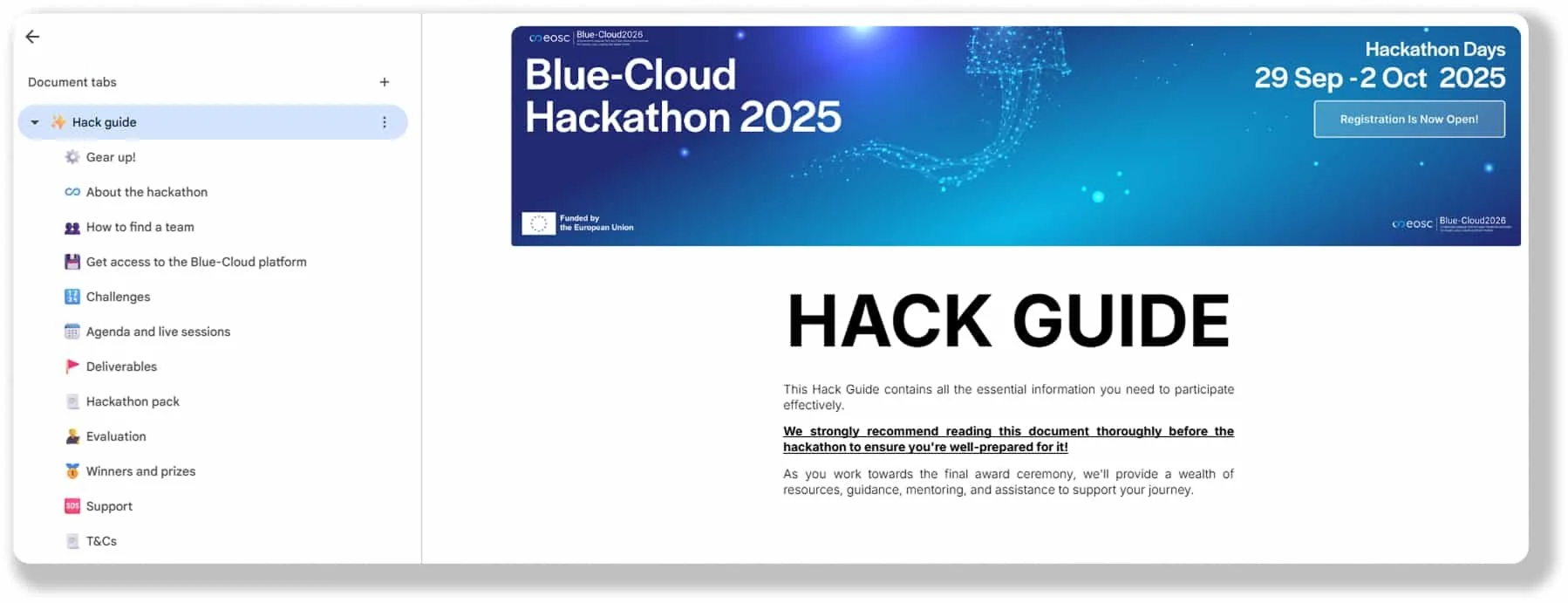
Having pre-defined templates can help us later to standardise and organise all the submissions during the evaluation process.
5. Ideation and hackathon preparation live sessions
Do not expect the hackathon participants to come prepared and already aligned with the hackathon goal and your expectations in terms of outcomes.
Help them by organising an ideation phase, which should entail several live sessions.
Here are some examples:
- How to create or join a team on the hackathon platform
- Tools and resources to be leveraged during the hackathon
- Inspirational talks
- The hackathon deliverables
- AMA (ask me anything) with mentors and experts

The ideation phase must be held before the hackathon, ideally after the team formation start and the hackathon kick-off.
Record each live session and make it available on your hackathon platform.
6. Mentoring structure setup
Three main approaches can be used for mentoring: vertical, horizontal, and mixed mentoring.
Vertical mentoring
By vertical mentoring, we simply mean one (or more) mentor to one team.
This approach can be used in case we have a large number of teams and, at the same time, we have access to a very large pool of mentors.
This way, the mentors are sort of “responsible” for the team and the direction they’re taking while developing their ideas during the hackathon.
Horizontal mentoring
On the other hand, horizontal mentoring means that all the mentors are available to all the teams at the same time.
This approach should be backed with clear instructions on the horizontal mentors’ skills and how / when to get in touch with them.
Mixed mentoring
Mixed mentoring merges the elements of vertical and horizontal approaches.
Mentors are dedicated to specific teams while also offering support to the broader participant group.
Create a scheduling system for the teams to book a call with the mentors.
7. Evaluation process definition
While defining the evaluation criteria, we need to keep in mind that they will be available to the teams.
Having different weights for each criterion can result in the teams focusing on developing only certain aspects of their ideas: the ones that can allow them to be awarded the main points.
This is not bad news, though.
If we smartly plan the evaluation criteria, we’re indirectly driving the ideas towards our hackathon goals.
At Eventornado, we can help you set up the best evaluation criteria for you.
We want the evaluation process to be as easy as possible for the Jury members. They’re usually busy people.
8. Awards ceremony hosting
Celebrating is important!
An awards ceremony generates buzz and curiosity around your event.
While all the hard hackathon planning work can not be leveraged externally, tons of videos, images, and marketing material can be generated and showcased to your company’s ecosystem, stakeholders, and even future leads.
This is the occasion to build awareness, increase social media followers, and enhance your company’s image.
Rewatch the Blue-Cloud Hackathon Pitching & Award Ceremony!
If your event is physical, make sure everybody signs a waiver for image and video recording
Conclusions
While the above lists the main components of the perfect hackathon structure, many other elements should be considered while planning your event, such as:
- T&Cs compliant with the local regulations
- Graphic materials such as the hackathon logo, banners, certificates, etc.
- Divide the main hackathon goal into sub-themes or categories
- Choose appealing hackathon prizes
- Create a final event survey
- Host a lessons-learned session with the stakeholders
- For physical hackathons: choosing an accessible and memorable venue
Long story short: organising a hackathon requires a mix of expertise, skills, and mindset that must not be improvised.
If you want to learn more about how we can help you organize your hackathon, request a demo with our team today!

More articles by Eventornado



Are you looking to run a hackathon on Eventornado?
Request a demo, and we'll have you set-up in no time.
Request a Demo