
Definition and real case examples of hackathon problem statements for your hackathon in 2026
Introduction
Are you a hackathon organiser planning your next event?
We wrote this article for you to take some inspiration in writing down the problem statements to be solved by your hackathon participants, based on real use case examples.
We will provide a list of problem statements categorised by hackathon macro topic, deriving from past hackathons hosted on the Eventornado hackathon platform.
The hackathon macro topic
The hackathon macro topic is the specific field, industry, sector, area, or domain of the event.
It’s the big umbrella under which you can create several hackathon problem statements.
Definition of the hackathon problem statements
A hackathon problem statement outlines the specific challenge or issue that hackathon participants need to solve.
- An effective problem statement description often includes the following elements:
- A comprehensive but concise description of the current state of the situation
- The envisioned future state
- The importance of addressing the problem
- The tools or methodologies provided by the organisers to facilitate the creation of the solutions (optional)
- Examples of possible and expected solutions (optional)
Crafting a detailed hackathon problem statement helps guide participants and sets the stage for innovative solutions.
Lastly, the hackathon problem statements are also called sub-topics, challenges, themes, tracks, or categories.
Let’s begin with the list of macro topics and their real case problem statements.
Be inspired and have a good read!
Hackathons macro topics list
- Web3
- Femtech
- Healthcare
- Data
- Sustainability
- Bitcoin
- EdTech
- Blue Economy and Oceans
- Space
- Energy
- Blockchain
- DeFi
1. Web3
Event name
AIOTI - European WEB3 Accelerator - Hackathon #2

Macro topic
This event was a collaborative mission to unlock the unexplored possibilities of WEB3 technologies, transforming innovative ideas into real-world solutions for a sustainable and efficient digital future.
Organiser
AIOTI - Alliance for IoT and Edge Computing Innovation
Problem statements
DLT testing tools: DLT testing tools The "DLT Testbeds" challenge focused on benchmarking the boundaries of Distributed Ledger Technology (DLT) with a focus on its protocol performance and energy efficiency. This involved creating or refining frameworks to measure transaction speeds, energy consumption, robustness, and scalability. |
Data Protection / Whistleblowing This subtopic focused on personal data protection and data governance as key enablers of an improved digitalized societal model. |
Wild Card/DLT-IoT-AI Convergence The "Wild Card / DLT-IoT-AI Convergence" challenge invited participants to break new ground by developing innovative tech solutions that harness the synergy of Distributed Ledger Technology (DLT), the Internet of Things (IoT), and Artificial Intelligence (AI). This challenge was about exploring the intersections of these technologies to create scalable, secure, and efficient solutions for the digital future. |
Data Sharing This subtopic focused on data sharing as a key enabler for innovation ecosystems. |
2. Femtech
Event name
HackHERHealth

Macro topic
The HackHERHealth Hackathon was a hybrid event designed for participants to create solutions that help to close the gender health gap.
Organisers
This Femtech Innovation Hackathon was a truly collaborative event, harnessing the power of industry, academia, and the healthcare sector. It is organised under the Health Innovation West umbrella, sponsored by AstraZeneca and hosted by GoCo Health Innovation City and Sahlgrenska Science Park.
Problem statements
Improving Women’s Journey in Obesity Obesity presents a multifaceted challenge in women’s health, significantly impacted by life stages such as pregnancy and menopause, which bring unique hormonal changes and increase the risk of related conditions like Gestational Diabetes Mellitus (GDM). This challenge calls for innovative minds to:
|
Pregnancy and postpartum care Despite Sweden's advanced healthcare system, pregnant and postpartum women often face fragmented care and language barriers, leading to uncertainty and unequal access to support. We're inviting you to change this narrative through innovation:
|
Diagnosis for Neurodivergent Girls Neurodivergent girls, particularly those with Autism Spectrum Disorder (ASD) and Attention-Deficit/Hyperactivity Disorder (ADHD), often face overlooked symptoms and diagnostic gender biases, leaving them without the support they need. This challenge seeks to address these disparities by inviting innovators like you to:
|
Preventing Intimate Partner Violence Neurodivergent girls, particularly those with Autism Spectrum Disorder (ASD) and Attention-Deficit/Hyperactivity Disorder (ADHD), often face overlooked symptoms and diagnostic gender biases, leaving them without the support they need. This challenge seeks to address these disparities by inviting innovators like you to:
|
3. Healthcare
Event name
Sahlgrenska Global Health Hackathon
Macro topic
The Sahlgrenska Global Health Hackathon brought global health innovation to the local level through a series of hackathons, connecting innovators, researchers, clinicians, entrepreneurs, and problem-solvers worldwide to tackle five focused healthcare challenges.
Organiser
Problem statements
Health equality Globally, health disparities based on gender and ethnicity continue to impact access to care and health outcomes. Women and ethnic minorities often experience higher rates of chronic diseases, limited access to preventive care, and poor maternal health outcomes. These gaps are further exacerbated by socioeconomic barriers, leading to unequal healthcare access and quality. However, advancements in personalized medicine and artificial intelligence (AI) provide transformative opportunities to close these gaps. By harnessing the power of personalized medicine, sector convergence, and data-driven insights, we can disrupt traditional models and create scalable solutions that promote health equity and empower underserved populations with better, more personalized care and treatment options. |
Co-action to F*@# Cancer Cancer is a leading global cause of death, with current treatments often hindered by late detection and generalized approaches. Personalized medicine, which tailors treatment based on individual genetics and environmental factors, has the potential to revolutionize cancer care. By integrating data analytics and genomics, we can develop solutions that predict cancer risk, improve early diagnosis, and personalize treatments to enhance patient outcomes and reduce the burden of cancer on global health. |
Smart, safe, and sustainable healthcare The healthcare sector accounts for approximately 4.4% of global greenhouse gas emissions. If it were a country, it would rank as the fifth-largest emitter worldwide. Governments are striving for more efficient hospital operations, not only to cut costs but also to minimize environmental impacts and mitigate patient health risks. Hospital environments can negatively affect patients, exposing them to unfamiliar settings and increasing the risk of healthcare-associated infections. The challenge is to reimagine hospital operations, making them smarter, safer, and more sustainable for both the environment and patient outcomes, without compromising high-quality, patient-centered care. |
Forever vital As the global population ages, managing chronic diseases becomes increasingly critical for maintaining quality of life and reducing healthcare costs. Conditions like diabetes, cardiovascular disease, and neurodegenerative disorders require continuous monitoring and personalized interventions. By adopting a personalized approach and leveraging personalized medicine, we can develop innovative tools to better manage chronic conditions and promote healthy aging, enabling individuals to live longer, healthier lives. |
4. Data
Event name
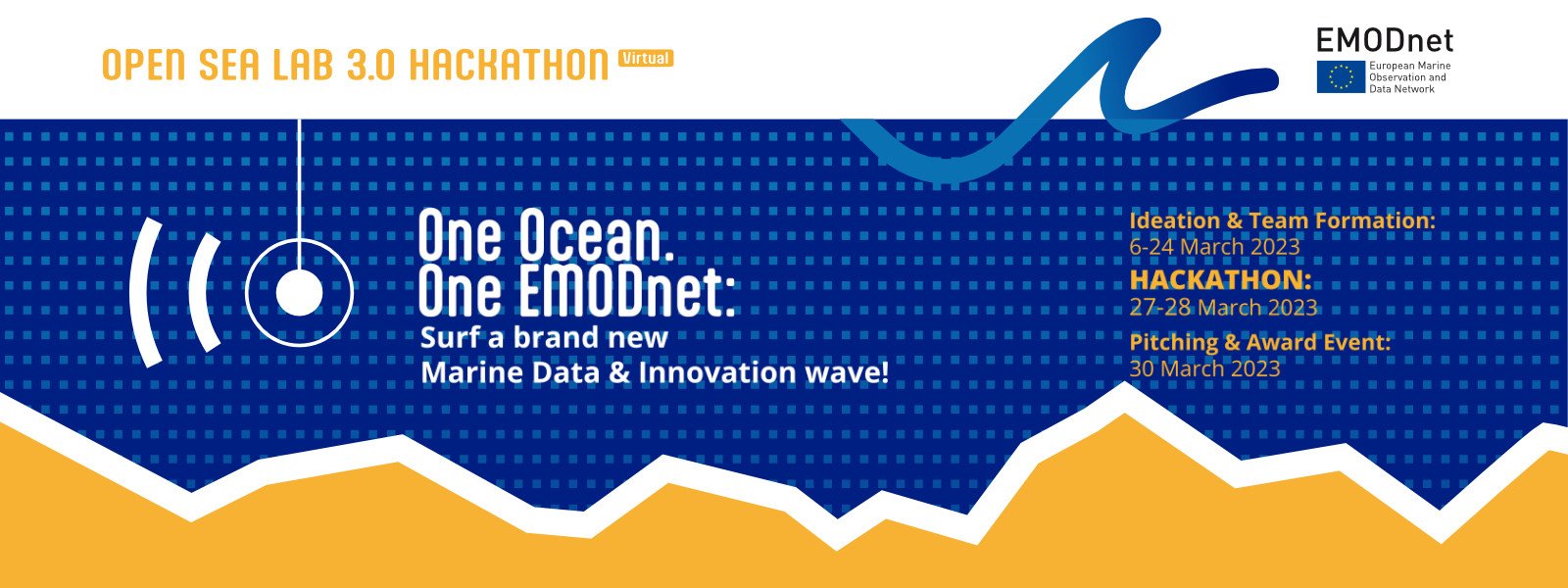
EMODnet Open Sea Lab 3.0 Hackathon
Macro topic
The Open Sea Lab Hackathon is a unique event that brings together data and multidisciplinary scientists, software developers, social innovators, and changemakers in Europe and around the world to harness the wealth of open-source, marine data offered by EMODnet to develop solutions to Ocean challenges.
Organiser
Problem statements
Protecting and restoring marine & freshwater biodiversity How might we leverage EMODnet to evolve a true trans-European nature network that protects our sea areas, to restore rivers, or to scale up nature-based solutions that improve the resilience of coastal communities? Participants will be challenged to use biology, seabed habitats, and human activities data, interacting with the EMODnet map viewer and data catalogue. |
Making the blue economy carbon-neutral and circular How might we leverage EMODnet to eliminate or sequester greenhouse gas emissions from maritime economic activities, develop zero-carbon and low-impact aquaculture, promote low-carbon, multi-purpose use of the marine and water space, or mobilise the ocean and inland waters’ potential for carbon-free energy? Participants will be challenged to use physics and human activities data, in combination with e.g., satellite data from Copernicus Marine Service and/or other data & research infrastructures (e.g., ICOS- Centre, Lifewatch, EMBRC), and any other data deemed relevant, interacting with EMODnet map viewer and data catalogue. |
Empowering social innovation How might we leverage EMODnet to inspire and support social innovation practices or participatory governance approaches that empower citizens to co-design and co-implement solutions to restore our Ocean and Waters by 2030? Participants will be challenged to leverage available resources (e.g., the EU Atlas of the Seas) to develop new applications that enhance users’ capabilities to respond to Ocean challenges, including promoting Ocean literacy and citizenship and/or making data more accessible to citizens (e.g., building a bot in Twitter that feeds off the Atlas of the Seas to provide user-requested updates on any specific resource published). |
Eliminating pollution of our oceans, seas, and waters How might we leverage EMODnet to reduce microplastics and plastic litter at sea or to reduce the use and risk of chemical pesticides, through innovative solutions or improved international governance? Participants will be challenged to use chemistry, physics, and human activities data, interacting with the EMODnet map viewer and data catalogue. |
Contributing to the UN Decade of Ocean Science for Sustainable Development How might we leverage EMODnet to advance a digital knowledge system that supports international collaboration towards better understanding, monitoring, forecasting, and protecting the Ocean? Participants will be challenged to merge data from EMODnet (including resources available for Global Stakeholders), Copernicus Marine Service, Copernicus Earth observation, and/or any other data service. |
Wild card: Hack the ocean! How might we leverage EMODnet data for the change that you would like to see in our relationship with the Ocean? |
5. Sustainability
Event name
ROWAD Hackathon
Macro topic
Bring together entrepreneurs and startups to develop cutting-edge solutions to challenge across five categories, namely FinTech, AgriTech, EduTech, and Sustainability Tech.
Organiser
Problem statements
FinTech Fintech startups developing new technology that seek to improve and automate the delivery and use of financial services to businesses or consumers are eligible to apply. |
HealthTech The HealthTech challenge revolves around harnessing technology to revolutionize healthcare and improve patient outcomes. Participants developing innovative solutions that address pressing healthcare issues, from enhancing patient care and remote monitoring to streamlining medical record management, Telehealth Infrastructure, Security & Privacy, Patients’ experience, etc. |
Sustainability Tech Sustainability Tech is dedicated to addressing environmental and sustainability issues through technological innovation. Participants creating solutions that promote eco-friendly practices, reduce carbon footprints, and contribute to a more sustainable future in Renewable energy & energy security, social sustainability, protecting global biodiversity, etc. |
AgriTech The Agritech Sector focuses on leveraging technology to address pressing agricultural and food-related issues. Participants working on developing cutting-edge solutions that enhance efficiency, sustainability, and productivity in the agricultural sector, that involves: Digitization of food systems, Autonomous agricultural machinery, Product Quality Control and others. |
EduTech Edutech is centered on reimagining education through technology-driven solutions. Participants working on creating innovative tools and platforms that enhance learning experiences, bridge educational gaps, and empower educators and learners through gamification, social learning, online testing, etc. |
6. Bitcoin
Event name
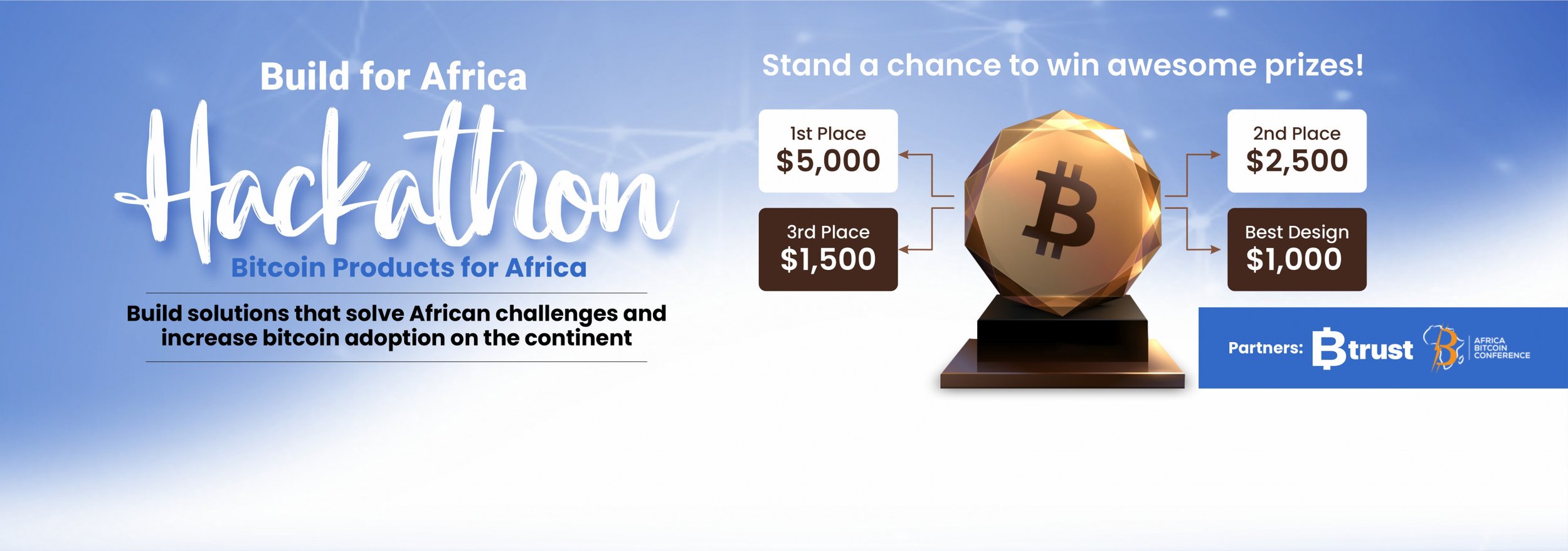
Build for Africa Hackathon
Macro topic
Build innovative applications and tools to solve African problems powered by Bitcoin and the Lightning network.
In partnership with the Africa Bitcoin Conference 2023, the Build for Africa Hackathon served as a launchpad for open innovation and collaborative problem-solving, where builders converged to generate novel ideas through an idea hack focused on tackling Africa-specific challenges, and accelerate their Bitcoin and Lightning projects through mentorship in contextual design and development.
Organiser
Problem statements
Cross-Border Settlements / Payments Innovative solutions to make international settlements faster, cheaper, and more accessible than before in Africa, using Bitcoin & Lightning |
Education and E-Learning Innovative solutions to enhance learning experiences, democratize access to education, and reshape the future of online learning in Africa, using Bitcoin & Lightning |
Social / Community Impact Innovative solutions to drive positive social and community impact, promote financial inclusion and economic empowerment in Africa, using Bitcoin & Lightning |
Media and Entertainment Innovative solutions to enhance content delivery, enable microtransactions, or build decentralized media platforms to revolutionize how we consume, create, and distribute content in Africa, using Bitcoin & Lightning |
Business Administration Tools Innovative solutions for efficient accounting, revolutionizing bookkeeping, CRM and payroll systems, or reimagining inventory management in Africa, using Bitcoin & Lightning |
Microtransactions and Micropayments Innovative solutions for handling micro digital payments and small-scale financial transactions efficiently and securely in Africa, using Bitcoin & Lightning |
Regulatory Frameworks Innovative solutions to resolve critical regulatory issues, and streamline/modernize regulatory processes in Africa, using Bitcoin & Lightning |
Governance and Anti-Corruption Innovative solutions to promote transparency, accountability, and good governance (such as decentralized voting systems, transparent supply chain tracking, or anti-corruption monitoring tools) across various sectors in Africa, using Bitcoin & Lightning |
Privacy Tech (KYC, Non-custodial Solutions) Innovative solutions that protect user privacy, enhance financial security, and decentralize control over personal data in Africa, using Bitcoin & Lightning |
Agriculture and Food Security Innovative solutions to address agriculture and food security challenges, improve supply chains, traceability, and access to food resources in Africa using Bitcoin & Lightning |
Peer-to-Peer Marketplaces Innovative solutions to empower individuals and businesses, streamline transactions, and unlock new opportunities for economic growth in Africa, using Bitcoin & Lightning |
Healthcare and Telemedicine Innovative solutions to improve healthcare accessibility, enhance remote medical consultations, and empower patients with secure, decentralized healthcare in Africa, using Bitcoin & Lightning |
Energy and Sustainability Innovative solutions to optimize energy distribution, promote renewable energy adoption, or create bitcoin-based sustainability initiatives in Africa, using Bitcoin & Lightning |
7. EdTech
Event name
EdTech Hack 2025
Macro topic
Create visionary and sustainable ideas that can reshape the landscape of education.
Organiser
Problem statements
| Talk more, talk better: Across schools, workplaces, and leisure environments, learners of Estonian often face limited opportunities to practice the language in real-life contexts. Suitable tools and safe, consistent spaces for developing spoken skills are lacking, which hinders both confidence and fluency. Solutions are needed that create more chances for meaningful interaction, provide feedback, and foster motivation to speak Estonian daily, empowering learners to use the language naturally across everyday situations. |
| Smart support for teachers: Teaching Estonian as a second language often involves time-consuming manual work, including creating exercises, providing individualized feedback, and testing students. Many teachers spend significant effort on administrative and repetitive tasks, which limits their ability to focus on instruction. Digital solutions are needed that streamline material creation, feedback, and assessment, support differentiated teaching, and provide effective tools for managing multilingual classrooms, allowing teachers to dedicate more time to meaningful learning and student engagement. |
| Language learning that is accessible and motivating for everyone: Learning Estonian can often feel demotivating and difficult to track, while existing tools are hard to find, and learners with special needs may lack equal access. Solutions are needed that help learners monitor their progress, recognize achievements, and study Estonian regardless of their background or abilities, making language learning more motivating, measurable, and inclusive for everyone. |
| Other: creative solutions for supporting language learning and Estonian-language education: Many innovative ideas for Estonian language learning and teaching do not fit into predefined categories, yet they have the potential to make education smarter, more inclusive, or more effective. This category invites creative thinkers to experiment beyond conventional boundaries and contribute unique perspectives that can shape the future of Estonian language education. |
8. Blue Economy and Oceans
Event name
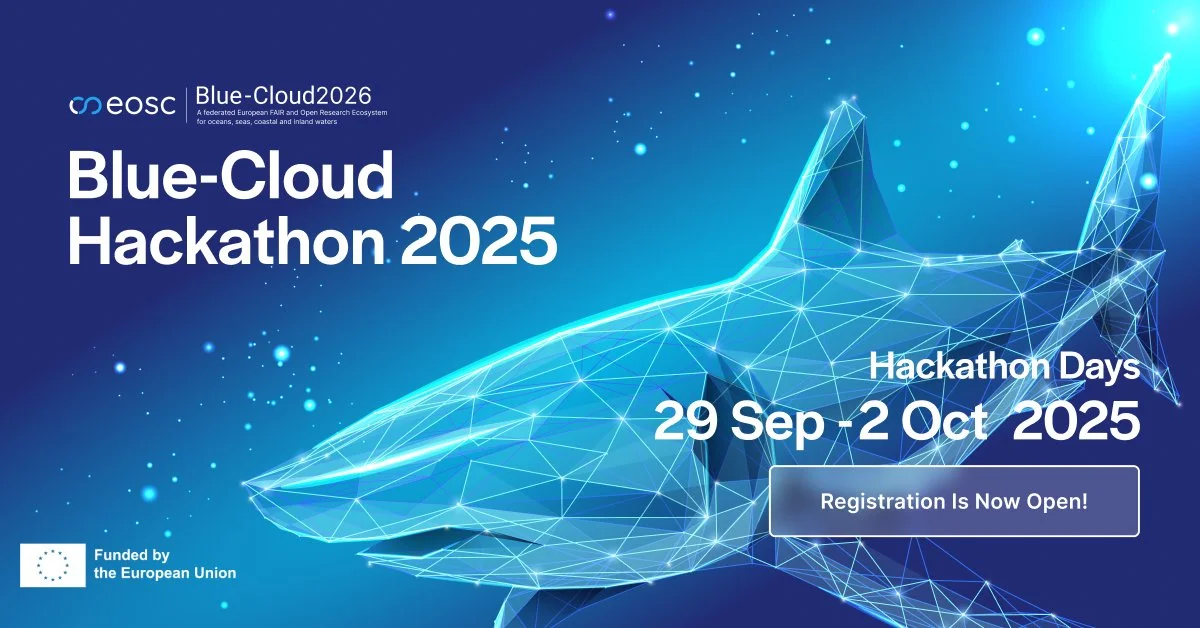
Blue-Cloud Hackathon 2025
Macro topic
Design and test innovative workflows using Blue-Cloud’s Virtual Labs, Workbenches, and tools to develop solutions for ocean sustainability and the Blue Economy.
Participants gain hands-on experience applying Blue-Cloud services to address real-world marine challenges, prototype solutions, and explore opportunities for sustainable ocean use.
By engaging with real user needs and identifying areas for improvement, they help strengthen the Blue-Cloud ecosystem while advancing open, collaborative efforts for healthy and productive oceans.
Organiser
Problem statements
Mapping & Understanding Marine Ecosystems and Species How might we use collaborative science to advance the knowledge of marine ecosystems and species? Marine ecosystems and their diverse species play a vital role in our lives. They regulate the Earth’s climate and are a primary source of food for billions of people. They support numerous economic activities and provide livelihoods for coastal communities around the World. However, from plankton -the fabric of the Ocean-, to fisheries, our knowledge of species and ecosystems remains difficult to analyze with integrative approaches. With your help, we can hack available data to address important knowledge gaps. |
Supporting Early Warning & Response to Accidents or Natural Events How might we use collaborative science to advance our ability to predict risks from natural events, or to ensure a swift response to accidents at sea? Global change is affecting the way that species feed, move, and inhabit the marine realm. Species migrations can have an impact on human livelihoods that rely on fisheries as a source of protein for human consumption. In addition, activities at sea carry risks to human life, and to wildlife. With your help, we can evolve early warning mechanisms to anticipate a more effective response to global change. |
Tracking & Forecasting Ocean Health How might we use environmental indicators to understand complex phenomena affecting marine ecosystems and detect changes in their status with sufficient time to respond? Climate change is causing severe impacts on marine ecosystems. However, these changes are often difficult to anticipate, leading to delays in the implementation of actions that could mitigate risks and help us adapt to new conditions. With your help, we can track and anticipate changes in the health of marine ecosystems to anticipate a more effective response. |
Wild Card: Double up with EDITO! How might we leverage the European Digital Twin Ocean platform to address Ocean challenges? EDITO is the public backbone infrastructure of the European Digital Twin Ocean. This wildcard invites you to address any Ocean challenge of your choice, harnessing the resources available in the EDITO platform in combination with resources offer |
9. Space
Event name
Act In Space Sweden

Macro topic
A 24-hour hackathon of fun and creativity, to engage in cross-functional teams that worked hard to solve Challenges from Space-related industries.
Participants had the chance to turn their ideas into actual concept solutions, with the potential to make a true impact on both the planet and space industry.
Organiser
Problem statements
Do you copy? Enable Space transportation missions around Earth and far beyond by proposing new key technology brick. |
| Fighting for Climate Change With the smartest constellation combining radar and optical satellites, Airbus Defence and Space provides what you need - when you need it: wide coverage, fine detail, intensive monitoring, reliable and successful new collections, fresh and extensive archives, premium reactivity. To create new innovative services from Satellite imagery, Airbus Defence and Space is providing you access to the UP42 Platform. |
The Power of Earth Observation & AI. Leveraging the power of Earth Observation and open sources data via Artificial Intelligence. |
Invent a recyclable satellite Nowadays satellites are not designed to be recycled, and there is no enabling infrastructure. As a result a progressive saturation on the most common orbits is observed (most noticeably for the polar orbits, between 700 and 1000 km), being a source of collisions generating space debris that may start chain reaction collisions. Yet, on Earth numerous circular economies are developing, from chemical batteries, to materials (plastic, steel, …) … |
Invent public services for space Invent a paradigm where space objects could benefit from orbital services (for example like fuel stations, wireless electrical distributions, digital cloud storage, …) What types of services would be needed and why ? What infrastructures would be required to offer such services ? How serviceable space objects would look like ? |
10. Energy
Event name
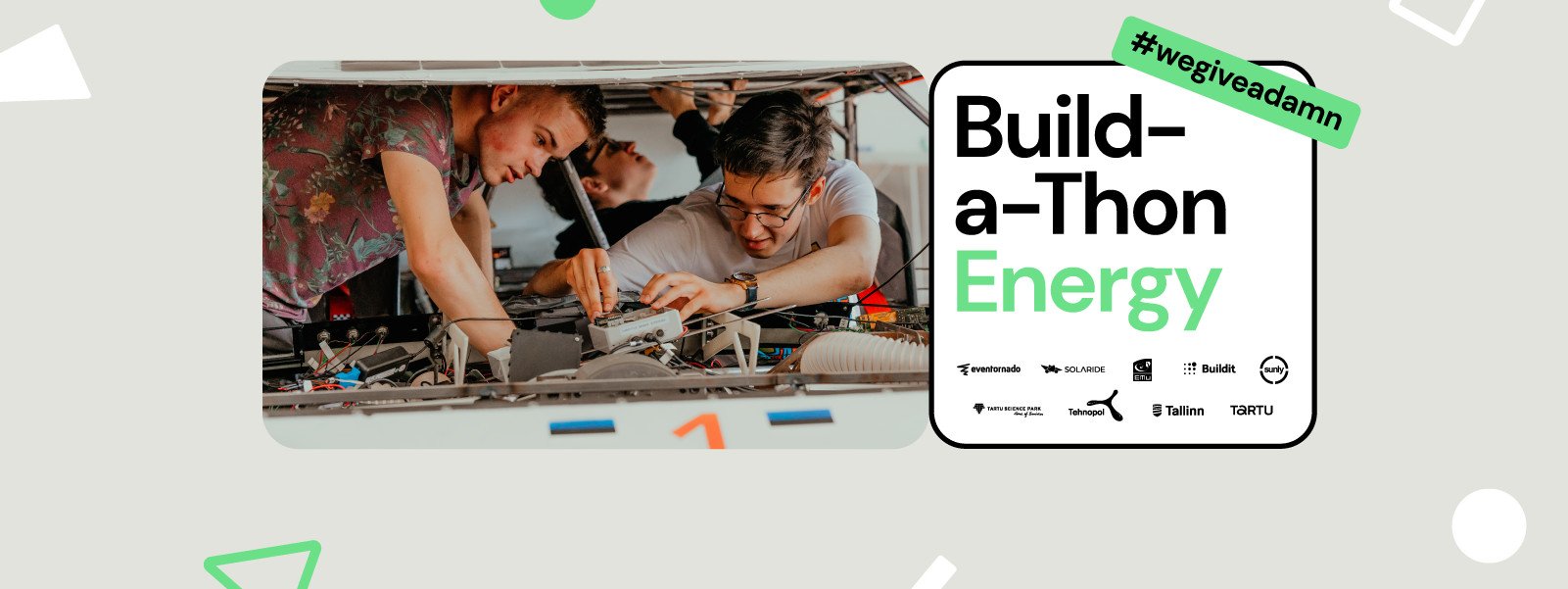
Build-A-Thon Energy
Macro topic
Build-A-Thon Energy was a hackathon for BUILDERS, welcoming all skills to build things you can see, touch, and feel - electrical and mechanical engineers and product designers.
As every hardware project needs software skills, the event also welcomed software developers, UI/UX designers, and product managers. All crazy ideas were welcome
The global power and energy landscape is in crisis. The cost of energy has been growing rapidly due to the geopolitical situation. But the whole field has been undergoing changes already before - the way energy is produced, stored, and used is going through a paradigm shift. The demand for energy will only keep rising with the influx of modern technology. To keep up with the rising demand, producing more energy might seem to be the only way, but saving energy is also a key factor.
Organiser
Problem statements
| Reducing the number of cars on the campuses There are currently about 450 cars per 1,000 inhabitants in Tallinn. How to create multifunctional solutions in the Tehnopol campus that would allow the maximum and variable use of the resources of the campus by different users? E.g how to make journeys greener, healthier, safer for children, exciting / educational. etc. |
How to survive the next 3 winters in the current energy situation in private houses, apartment buildings, and small industries? How to survive the next 3 winters in the current energy situation. - Private house Problems: How to optimally keep the room warm and the electricity in the room? How to ensure energy security in a private house in a situation where the network does not guarantee it? |
Develop a leakage detection sensor that would use leak detection wire incorporated into pipes to detect pipe leakages The task is to develop a leakage detection sensor which would use leak detection wire incorporated to pipes to detect, and if possible, determine the location of the pipe leakages |
11. Blockchain
Event name
Blockchain Hackathon
Macro topic
The hackathon aimed to build the future of Web 3.0 and discover which applications potentiate the use of blockchain technologies.
From decentralized finance to NFT, from DAO to decentralized applications, the hackathon aimed to explore how blockchain at the interplay of artificial intelligence will revolutionize fields such as industry, finance, and even the services and cities of the future.
Organiser
Problem statements
Smart Cities Municipalities currently rely heavily on non-renewable energy sources to power their infrastructure, resulting in increased CO2 emissions and contributing to climate change. Despite the presence of locally produced renewable energy sources, such as solar, wind, and hydro energy, they are not effectively harnessed and utilized, leading to missed opportunities for sustainability. The challenge is to develop an innovative solution that can manage and distribute these renewable energy sources effectively to reduce dependence on non-renewable sources and lower CO2 emissions in municipalities. This can lead to a more sustainable and environmentally friendly approach to energy management and distribution in municipalities. |
Predictive Maintenance Industries face significant losses due to unscheduled downtimes of their equipment. Predictive maintenance techniques have been developed to mitigate such losses by predicting equipment failures before they occur. However, these techniques require accurate data to provide reliable predictions. The data is typically generated by sensors and other monitoring systems installed on the equipment. The data collected is usually stored in a centralized database, which raises concerns about data security and privacy. Moreover, different stakeholders such as equipment manufacturers, equipment operators, maintenance service providers, and insurers need to access this data. Ensuring data integrity, security, and privacy, while enabling multiple stakeholders to access it, is a significant challenge. |
Sustainability reporting in the supply chain Supply chains are complex networks of companies and organizations that work together to create and deliver goods and services. Ensuring that these supply chains operate sustainably is becoming increasingly important for businesses, consumers, and regulators. However, reporting on sustainability in supply chains is challenging due to a lack of transparency, accuracy, standardization, and credibility. This can lead to negative impacts on the environment, society, and the economy, as well as reputational and compliance risks for companies. Blockchain technology has the potential to address these challenges by providing a secure, transparent, and immutable platform for collecting, verifying, and sharing sustainability data across the entire supply chain. By using blockchain, stakeholders in the supply chain can share data in real-time, without the need for intermediaries, while ensuring the privacy and protection of sensitive information. |
NFTs in further education The current education landscape lacks a secure and tamper-proof system for verifying and recognizing learners' achievements. Traditional academic certificates and credentials are often difficult to verify and are not always recognized by employers. Furthermore, the current system does not enable learners to showcase their practical skills and experience, which are increasingly sought after by employers. Therefore, there is a need for a secure and decentralized system that can recognize learners' achievements and provide verifiable credentials that are recognized by educational institutions and employers alike. |
12. DeFi
Event name
MXNB Hackathon
Macro topic
This four-week global online challenge empowers builders to reimagine the future of finance by creating and launching real-world payment and DeFi apps powered by MXNB, the leading Mexican peso stablecoin, and Bitso’s Business API suite.
Organiser
Problem statements
| Payments Across Mexico and Latin America, payment systems remain fragmented, expensive, and slow, especially for cross-border transactions, remittances, and everyday digital payments. Individuals, creators, freelancers, and businesses often face high fees, delayed settlements, and currency instability that limit financial inclusion and economic participation. The emergence of MXNB, the first Mexican peso stablecoin on Arbitrum, creates a unique opportunity to rethink how payments work in a decentralized world. By leveraging stable, low-cost blockchain infrastructure and modern payment rails, builders can design seamless, real-world payment experiences that enable instant settlement, local value preservation, and scalable financial flows, unlocking more accessible, efficient, and inclusive payments for the next billion users. |
DeFi Despite the rapid growth of decentralized finance, most DeFi products remain denominated in volatile or foreign currencies, limiting their accessibility and relevance for users in Mexico and across Latin America. This disconnect creates barriers to adoption, financial planning, and real-world utility, particularly for individuals and organizations that operate primarily in local currencies. MXNB introduces the stability of the Mexican peso into the open DeFi ecosystem, unlocking new possibilities for transparent, accessible, and locally meaningful financial infrastructure. By building peso-denominated DeFi primitives and platforms, ranging from lending and savings to insurance, payroll, and real-world asset protocols, builders can bridge traditional finance and decentralized systems, enabling more inclusive, trustworthy, and practical financial services designed for everyday use, one peso at a time. |
| Open build on Arbitrum While blockchain innovation continues to accelerate, many promising onchain ideas are constrained by high transaction costs, limited scalability, or rigid thematic boundaries. Builders exploring new primitives, tools, and experiences often need flexible, performant infrastructure that allows experimentation without friction. Arbitrum’s scalable, secure, and low-fee environment removes these barriers, enabling developers to freely explore a wide range of use cases, from infrastructure and developer tools to DAOs, NFTs, games, and experimental applications. This open track invites builders to push the boundaries of what’s possible onchain, fostering creativity and innovation beyond predefined use cases and empowering the next generation of decentralized applications. |
Conclusion
Defining the problem statements for your hackathon can be a complex task.
As they say, “trash in, trash out”: if you provide a vague problem statement description, there’s a high chance you will receive hackathon ideas and solutions that will not be aligned with your hackathon's purpose.
The problem statement description must not be too long to avoid discouraging the idea proposals, but also can’t be too short, preventing the participants from receiving key information to work on.
We can help you write your hackathon problem statements, providing the perfect description, derived from our past hackathon experience.
Request a demo with our team today!



Are you looking to run a hackathon on Eventornado?
Request a demo, and we'll have you set-up in no time.
Request a Demo