
Datathon use case: the EMODnet Open Sea Lab 4.0 Hackathon
Held virtually from 25–27 March 2025, the EMODnet Open Sea Lab 4.0 Hackathon brought together ocean innovators, data scientists, researchers, engineers, and sustainability professionals from around the world to harness the power of EMODnet data and the European Digital Twin Ocean (EDITO).
Organized by EMODnet, EDITO, and the European Commission in cooperation with the Copernicus Marine Service, the event challenged participants to transform complex marine datasets into impactful, data-driven solutions addressing some of the most pressing ocean sustainability challenges.
Over the course of three intensive days, participants explored Europe’s leading ocean data infrastructures, combined in situ observations with satellite and climate datasets, and developed innovative applications for marine biodiversity, climate resilience, blue economy sustainability, and coastal management.
In this datathon use case article, we explore how Eventornado, as a hackathon agency, helped organize and manage the EMODnet Open Sea Lab 4.0 Hackathon and supported the creation of a highly international, collaborative, and data-driven innovation experience.
Table of contents
- What was the EMODnet Open Sea Lab 4.0 Hackathon?
- Why did people join?
- Who joined?
- Participation figures
- The stakeholders
- The hackathon challenges
- Hackathon timeline
- Winning teams
- How Eventornado helped organize the hackathon
- Conclusion
1. What was the EMODnet Open Sea Lab 4.0 Hackathon?
The EMODnet Open Sea Lab 4.0 Hackathon was a global virtual innovation event focused on leveraging marine and environmental data to support ocean sustainability and the European Digital Twin Ocean initiative.
Participants used EMODnet’s multidisciplinary marine datasets together with EDITO and Copernicus resources to build innovative applications and analytical frameworks addressing real-world ocean challenges.
The hackathon focused heavily on:
- Ocean data analysis
- GIS and geospatial intelligence
- AI and machine learning
- Environmental monitoring
- Marine policy support
- Digital Twin Ocean applications
- Sustainability and Blue Economy innovation
The Open Sea Lab 4.0 format strongly emphasized data exploration, scientific modelling, environmental intelligence, and evidence-based decision-making.
The event provided participants with direct access to Europe’s most advanced marine data infrastructures, enabling them to experiment with real-world ocean datasets and transform them into meaningful insights and actionable solutions.
Watch the post-event video!
2. Why did people join?
Participants joined the hackathon for several reasons.
- 🌊 Access to EMODnet’s large-scale marine data ecosystem and the opportunity to contribute to ocean sustainability initiatives.
- 📊 The chance to work with complex environmental datasets using AI, modelling, and geospatial analysis techniques.
- 🤝 International collaboration with experts across marine science, engineering, policy, sustainability, and technology.
- 🚀 Visibility opportunities through exposure to European marine organisations and the broader ocean innovation ecosystem.
- 🎤 The possibility for winning teams to present at European Maritime Day 2025 in Cork, Ireland.
- 🧠 Hands-on experience with the European Digital Twin Ocean and related data infrastructures, supporting upskilling in ocean data technologies.
3. Who joined?
The EMODnet Open Sea Lab 4.0 Hackathon welcomed highly multidisciplinary participants from across the world.
- 🧠 Data scientists and AI/ML specialists joined to apply advanced analytics and machine learning techniques to environmental and maritime datasets.
- 🌊 Marine scientists and researchers contributed expertise in biodiversity, climate science, ocean ecosystems, and marine sustainability.
- 📡 GIS specialists, Earth observation experts, and remote sensing professionals helped teams analyse spatial and geospatial marine data.
- 🛠️ Engineers and technology innovators explored scalable approaches for ocean technologies, coastal resilience, and marine infrastructure.
- 📃 Policy experts and sustainability advocates participated to ensure solutions aligned with environmental governance frameworks and societal needs.
- 🔷 Blue Economy professionals and entrepreneurs contributed business perspectives and helped shape scalable and impactful innovation concepts.
- 👩💻 Students and early-career professionals brought fresh ideas, creativity, and energy to the hackathon environment.
- 🗾 Environmental and coastal managers supported the development of practical, evidence-based approaches for coastal and marine planning.
4. Participation figures
The EMODnet Open Sea Lab 4.0 Hackathon achieved truly global participation.
Here are some key numbers from the event:
- 401 registrations
- 123 active starting participants
- 25 registered teams
- Participants from 73 countries
The geographical reach of the hackathon was particularly impressive:
- Europe: 34 countries
- Africa: 17 countries
- Asia: 13 countries
- North America: 3 countries
- Oceania: 3 countries
- Central and South America: 2 countries
This highly international (and intentional 😁) composition created a unique collaborative environment where participants could combine scientific, technical, environmental, and regional expertise from all over the world.
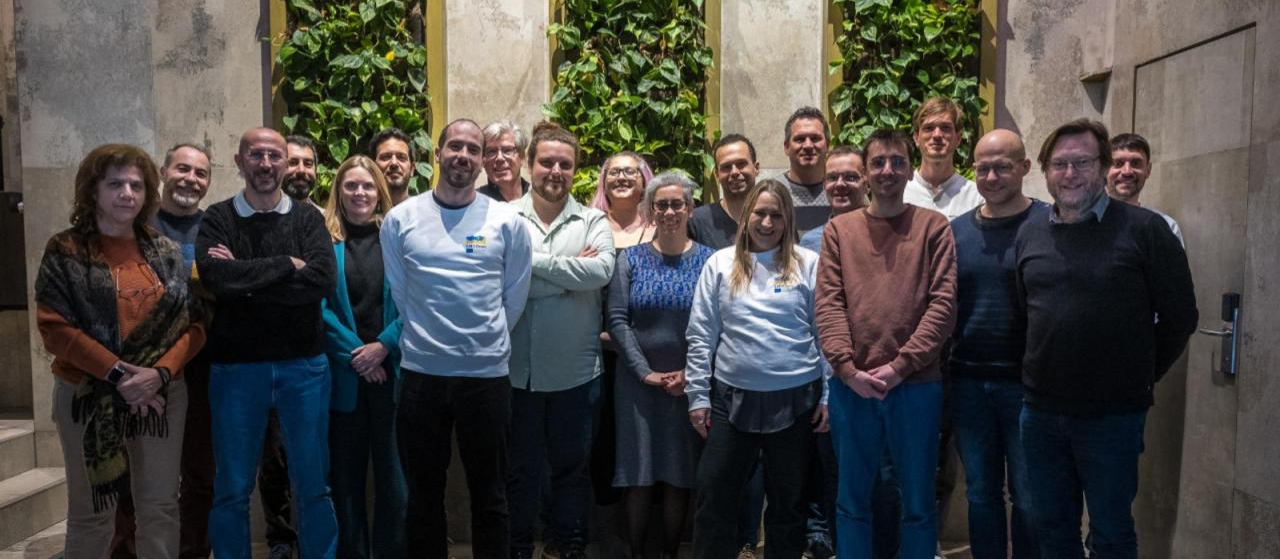
The mentoring team was composed of 22 experts with different roles, as follows:
- Lead mentors: overarching and supporting experts
- Mentors: subject matter experts
- Coaches: data experts
5. The stakeholders
The hackathon was co-organized by EMODnet, EDITO, and the European Commission in cooperation with the Copernicus Marine Service.

The initiative brought together major European organizations and infrastructures working on marine data accessibility, environmental intelligence, and the development of the European Digital Twin Ocean.
By combining these stakeholders, the event provided participants with direct exposure to some of Europe’s most advanced marine data ecosystems and sustainability initiatives.
6. The hackathon challenges
The EMODnet Open Sea Lab 4.0 Hackathon invited teams to tackle five major ocean sustainability challenges through data-driven innovation.
The challenges focused on how to use EMODnet data, EDITO resources, and complementary open datasets to support sustainable marine development, ecosystem protection, climate resilience, and maritime planning.
The five challenges were:
Challenge 1 — EMODnet for Supporting the Blue Economy Green Transition
EMODnet’s multidisciplinary marine and human activity data was used to design solutions supporting sustainability and innovation across Blue Economy sectors such as fisheries, aquaculture, renewable energy, and coastal tourism.
The focus was on improving decision-making, enabling more sustainable operations, assessing environmental impacts, and supporting biodiversity restoration.
A key emphasis was placed on leveraging in situ data to increase efficiency, reduce environmental pressures, and better monitor emissions across ocean-based activities.
Challenge 2 — EMODnet for a Healthy and Productive Marine Environment
This challenge explored how EMODnet’s localized in situ data could strengthen the evidence base for implementing the Marine Strategy Framework Directive (MSFD) and the Birds and Habitats Directive (BHD) within the EU Green Deal framework.
Tools and applications built during the hackathon used EMODnet data to improve marine environmental assessments at European, regional, and national levels, supporting ecosystem health evaluation, policy implementation, and quality status reporting.
Challenge 3 — EMODnet for Managing the Use of our Seas and Ocean
Using EMODnet’s in situ data, solutions were developed to support adaptive and climate-smart Maritime Spatial Planning (MSP) across national and cross-border contexts.
The goal was to balance ecological, economic, and social priorities while accounting for future climate impacts. Special attention was given to improving planning tools by integrating human activity, marine environment, and coastal datasets into forward-looking decision frameworks.
Challenge 4 — EMODnet for the Coast
With EMODnet in situ data and complementary open datasets, applications were created to assess coastal ecosystem health and condition.
Key issues addressed included sea-level rise, pollution, eutrophication, and broader climate change impacts.
The work focused on strengthening coastal monitoring, improving resilience, and supporting evidence-based management of the land–sea interface in support of coastal communities and the Blue Economy.
Challenge 5 — Wild Card! Hack the Ocean with EDITO
The EDITO platform and the European Digital Twin Ocean were used as a foundation for more experimental, open-ended solutions.
By combining EMODnet in situ data with Copernicus satellite observations, climate models, and other open datasets, teams developed applications focused on ocean monitoring, environmental protection, and sustainable resource management.
This challenge encouraged creative, cross-domain approaches to ocean problems through innovative data integration and advanced analytics.
7. Hackathon timeline
The EMODnet Open Sea Lab 4.0 Hackathon journey began in December with registrations and team formation.
After an ideation warm-up session in early March, teams finalized their concepts before entering the intensive hackathon sprint held between 25–27 March.
Participants worked on project summaries, technical analyses, presentations, and video pitches before entering the evaluation phase and final pitching session.
Below is the full hackathon timeline:
| 🟢 Registrations and team formation opens - 15 December @ 00:00 |
| 🌊 Ideation warm-up starts - 7 March @ 16:00 |
| ❌ Registration and team formation closes and 💡Idea submission - 17 March @ 18:00 |
| ⛵ Hack days start - 25 March @ 10:00 |
| 📃 Deliverable 1 // Project Summary - 25 March @ 14:00 |
| 🗃️ Deliverable 2 // Presentation - 25 March @ 18:00 |
| 🔗 Deliverable 3 [OPTIONAL] // Supporting evidence link - 26 March @ 18:00 |
| 📽️ Deliverable 4 // Video Pitch - 26 March @ 18:00 |
| 👩⚖️ Evaluation process starts - 26 March @ 18:01 |
| 🎉 Pitching and winners announcement! - 27 March @ 15:00 |
8. Winning teams
At the conclusion of the hackathon, two teams stood out for the quality, innovation, and environmental relevance of their projects.
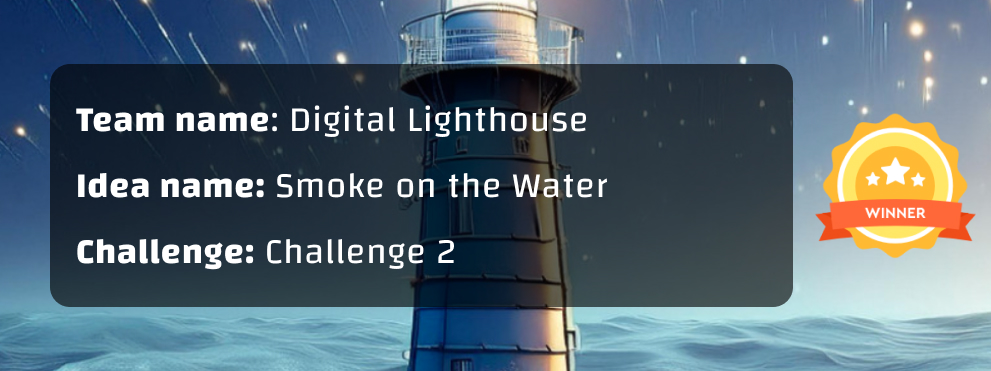
Smoke on the Water explored the impact of wildfires on marine ecosystems, particularly Posidonia oceanica meadows in the Mediterranean. Using EMODnet, EDITO, and Copernicus datasets, the project investigated how wildfire ash, pollutants, and terrestrial runoff affect water quality, biodiversity, nutrient cycles, and marine ecosystems. The team developed a data-driven framework capable of connecting wildfire events with marine environmental changes through geospatial analysis and ocean data integration. The project highlighted the growing importance of linking climate-driven terrestrial events with marine ecosystem monitoring and resilience strategies. |
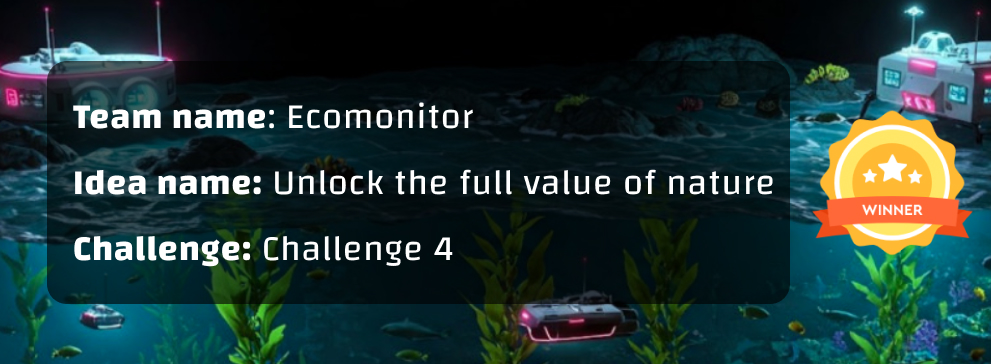
Ecomonitor focused on quantifying the economic value of healthy coastal ecosystems through AI-enhanced ecological modelling. Using EMODnet environmental and societal datasets, the project explored how coastal ecosystems reduce the risks and impacts of natural catastrophes for nearby human communities. The solution aimed to demonstrate that ecosystems generate major economic and societal value beyond direct resource extraction, supporting stronger investment into climate adaptation and coastal resilience. The project combined environmental intelligence, sustainability economics, and AI modelling into a scalable framework for ecosystem valuation and decision support. |
Rewatch all the finalist teams' pitches during the award ceremony!
9. How Eventornado helped organize the hackathon
As a hackathon agency, Eventornado supported the EMODnet Open Sea Lab 4.0 Hackathon across the entire event lifecycle.
Our role included the planning, engineering, management, and operational coordination required to deliver a highly international and data-intensive virtual innovation event.
9.1. Hackathon design and planning
We worked closely with the organizing stakeholders to define the event structure, workflows, timelines, deliverables, mentoring approach, and participant journey.
This included:
- Timeline and workflow engineering
- Deliverables structure
- Team formation setup
- Evaluation process design
- Mentoring workflows
- Live session coordination
- Hackathon operational planning
9.2. Eventornado platform setup
We configured the Eventornado platform to support the complete virtual hackathon experience.
This included:
- Participant registrations
- Team formation and matchmaking
- Deliverables submissions
- Timeline management
- Information tabs and resources
- Live sessions integration
- Jury and mentor coordination
The platform enabled smooth collaboration across participants distributed around the globe.
9.3. International participant outreach
As part of the participant acquisition campaign, Eventornado helped support participant outreach and visibility efforts to attract a highly international audience.
The event ultimately reached participants from 73 countries, creating one of the most globally distributed communities around marine innovation and sustainability.
9.4. Online hackathon coordination
During the hackathon days, Eventornado managed the operational side of the event, including:
- Communication with the teams
- Matchmaking and team formation
- Deliverables management
- Live session moderation
- Mentoring and coaching coordination
10. Conclusion
The EMODnet Open Sea Lab 4.0 Hackathon demonstrated how marine data, AI, geospatial intelligence, and collaborative innovation can accelerate new approaches to ocean sustainability and Digital Twin Ocean development.
By bringing together participants from 73 countries, the hackathon created a truly international environment where scientists, engineers, policymakers, developers, and sustainability experts could collaborate on shared ocean challenges using real-world marine datasets.
The event also highlighted the growing importance of data-driven hackathons as a format for transforming complex environmental data into actionable intelligence, scalable tools, and evidence-based solutions.
At Eventornado, we supported the initiative as a hackathon agency, helping deliver the operational infrastructure, participant management, and digital collaboration environment needed to run a successful global innovation event.
From platform setup and participant onboarding to mentoring coordination and live event management, our role was to ensure that organizers and participants could focus entirely on solving meaningful challenges through data-driven innovation.
The EMODnet Open Sea Lab 4.0 Hackathon is a strong example of how hackathons can mobilize global talent, unlock the value of open environmental data, and accelerate collaboration around sustainability and ocean intelligence.
If you are looking for a hackathon agency to organize your next hackathon or innovation challenge, get in touch with Eventornado today!

More articles by Eventornado

Are you looking to run a hackathon on Eventornado?
Request a demo, and we'll have you set-up in no time.
Request a Demo