

What is the goal of an internal hackathon?
Internal hackathons can cover diverse company goals.
These are the ones most companies aim for:
Accelerating innovation, creating brand awareness, developing a product, measuring employee satisfaction, lifting creativity, retaining talents, or engaging with partners, customers, or employees
If you're still uncertain about the concept of a hackathon, the issues it addresses, or the reasons why your company should host one, you may want to read this article first.
The steps
These are the steps to conduct an internal hackathon:
- Choose the hackathon type
- Define the hackathon goal and challenge categories
- Onboard mentors
- Create a hack guide for participants
- Write the rules
- Secure a great hackathon platform
- Host a memorable winners’ ceremony.
In this article, we aim to break down every planning step of organising an internal hackathon, from choosing the hackathon type to the final celebration.
Table of contents
- Choose the hackathon type
- Define the hackathon goal and challenge categories
- Onboard mentors
- Create a hack guide for participants
- Write the rules
- Secure a great hackathon platform
- Host a memorable winners’ ceremony
- Conclusion
1. Choose the hackathon type
An internal hackathon can be:
- Physical or in presence
- Online or virtual
- Hybrid
We’ve written a deep dive into this matter in this article.
Make sure you read it if you’re not familiar with the available types of hackathons!
2. Define the hackathon goal and challenge categories
In this process, you ideally sit down with your team responsible, other involved business units, and company departments to converge on the main hackathon goal.
The goal of an internal hackathon can be very different and will depend on the company’s needs when planning the hackathon.
Make sure you think this through before starting any planning activity.
Examples of internal hackathon goals can be:
- Boosting creativity and generating new ideas
- Creating new internal synergies and strengthening teamwork
- Promoting an innovation mindset and culture
- Retaining top talents
- Acquiring the skills of the future
- Raising workplace attractiveness and improving the company’s public perception
- Receiving feedback from employees
Are you looking for some inspiration?
You can either read this article, where we explain the main benefits of internal hackathons, or read our internal hackathons-related blog posts.
Once you’ve defined your main hackathon goal, it’s time to understand if you would like to create additional challenge categories/topics/themes/problem statements.
For example, if you’re running a hackathon with the main goal of closing the gender health gap, you could propose the following challenge categories:
- Improving Women’s Journey in Obesity
- Advancing Accessibility & Precision of Diagnosis for Neurodivergent Girls
- Rethinking and Innovating pregnancy and postpartum care
- Transforming Healthcare’s Role in Preventing Intimate Partner Violence
3. Onboard mentors

The Mentors are key in internal hackathons.
The perfect persona for this role is a middle management employee who is fully aware of the company’s mission and the hackathon goal.
At the same time, they have the technical knowledge to understand the teams’ ideas and direct them towards the hackathon goal if they’re deviating too much.
Try to build a heterogeneous group of mentors, putting together the totality of the skill set needed to cover all the hackathon aspects.
This could be a good skill set of mentors, for example:
- Business mentor
- Design thinking mentor
- AI mentor
- Technical mentor
- Challenge-specific mentor
Sometimes, it’s a good idea to onboard external mentors, who can bring a fresh external perspective to the event.
These people often participate under the “technical/AI/Design Thinking mentor” role, since their expertise can be related to special tools, methodologies, and approaches.
4. Create a hack guide for participants
Creating a hack guide document is crucial for your internal hackathon.
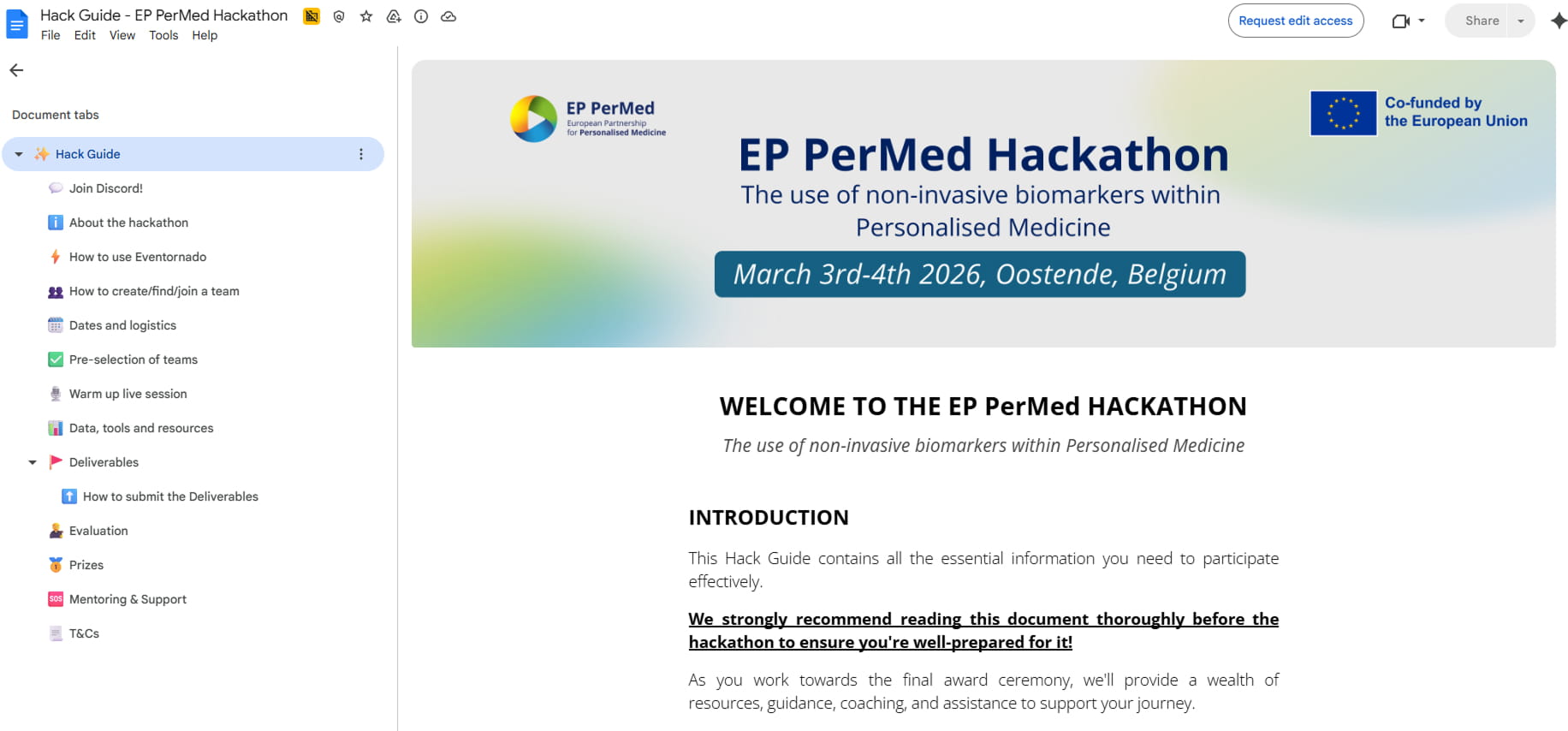
It provides essential information such as the agenda, the rules, and evaluation criteria, ensuring the teams are aligned and have a clear understanding of what is expected of them during the hackathon.
This document includes instructions on how to access and use the tools made available during the internal hackathon.
It also enhances the overall experience for everyone and improves the event’s success, making sure the participants stay focused and engaged during the whole duration of the event.
By providing participants with the tools and resources they need to succeed, you can create a memorable and impactful event.
5. Write the rules
Every respectful internal hackathon must have a Terms & Conditions document to be accepted by participants upon registration.
The purpose of the hackathon rules is to
- Safeguard participant rights
- Uphold fairness and transparency
- Manage liability
- Set clear IP ownership
Make sure your legal team is involved in this process!
6. Secure a great hackathon platform
The right hackathon platform fuels collaboration by offering communication and team-building tools.

The benefits of using a hackathon platform are multiple, for example:
- Effortless sign-ups & management (streamlining registration and organization)
- Centralised Information hub (providing easy access to all resources)
- Foster collaboration (facilitating teamwork and idea exchange)
- Enhance the judging process
An exceptional hackathon platform elevates the participant experience through a user-friendly and engaging interface.
This ensures smooth navigation throughout the event and keeps everyone informed of crucial updates.
7. Host a memorable winners’ ceremony
Celebrating at work is important!

An internal hackathon brings together multiple aspects worthy of celebration!
It's a chance to recognise employee achievements, celebrate innovation and collaboration, and boost morale.
8. Conclusion
While internal hackathons offer a wealth of benefits, detailed planning and flawless execution are crucial for their success.
First-timers often underestimate the intricate nature of organising one.
To ensure a thriving event, it is highly recommended to leverage the expertise of seasoned hackathon professionals.
Their ability to pinpoint project dependencies and implement best practices is the key to a truly successful online hackathon.
If you want to learn more about how we can help you organize your hackathon, request a demo with our team today!

More articles by Eventornado



Are you looking to run a hackathon on Eventornado?
Request a demo, and we'll have you set-up in no time.
Request a Demo