
Innovation challenge use case: Catalocity
The Nokia Catalocity Challenge was an innovation challenge designed to empower students from the American University of Sharjah to develop AI-powered solutions addressing real-world challenges related to quality of life, sustainability, and communication.
Organized by Nokia in collaboration with the American University of Sharjah, the event brought together interdisciplinary student teams to explore how artificial intelligence and telecom-enabled technologies can contribute to a smarter, more sustainable, and more connected future.
Through a structured innovation journey, participants moved from idea generation and team formation to prototyping, testing, mentoring sessions, and final pitching, transforming ambitious concepts into impactful AI-driven solutions.
In this use case article, we explore how the Nokia Catalocity Challenge was designed and organized, the challenges tackled by participants, and the impact generated through this AI-focused student innovation program.
Table of contents
- What is the Nokia Catalocity Challenge?
- Why did people join?
- Who joined?
- Participation figures
- The Catalocity challenges
- Agenda and timeline
- Winning teams
- Prizes
- Conclusions
1. What is the Nokia Catalocity Challenge?
Catalocity is an innovation challenge created to ignite creativity, accelerate AI-driven ideas, and empower students to build impactful solutions addressing real-world problems.
The name “Catalocity” combines the concepts of “Catalyst” and “Velocity”, representing the ambition to spark innovation while accelerating ideas into practical applications with meaningful impact.
Developed in support of the UAE’s strategic vision to become one of the world’s leading nations in Artificial Intelligence, the challenge created an environment where students could collaborate, experiment, and develop solutions aligned with emerging societal and technological needs.
Participants joined interdisciplinary teams composed of developers, engineers, researchers, and innovators, working together to explore how AI and telecom technologies can improve the quality of life, environmental sustainability, and communication systems.
Throughout the challenge, students were encouraged to transform bold concepts into scalable AI-powered solutions capable of contributing to the UAE’s rapidly evolving digital and innovation ecosystem.
2. Why did people join?
Students joined the Nokia Catalocity Challenge for several reasons:
- 💰 Many participants were attracted by the opportunity to secure funding and gain access to potential investor connections, helping them move their ideas beyond the prototype stage.
- 🤖 Others joined to work on meaningful AI-driven challenges connected to real-world societal and environmental issues, applying their technical skills to impactful use cases.
- 📚 The challenge also offered valuable learning opportunities through workshops, mentoring sessions, and direct interactions with experts and industry professionals.
- 🤝 For many students, the event represented a unique opportunity to collaborate with like-minded peers, expand their professional network, and gain exposure to innovation and entrepreneurship ecosystems in the UAE.
3. Who joined?
The Nokia Catalocity Challenge was open exclusively to students from the American University of Sharjah, bringing together participants from a wide range of engineering and technical disciplines.
Participants included students from:
- 🧬 Chemical and biological engineering
- 💻 Computer science and engineering
- 🔧 Mechanical engineering
- 🔌 Electrical engineering
- 🏗️ Civil engineering
- 🏭 Industrial engineering
- 🔩 Intelligent systems and mechatronics
This multidisciplinary environment enabled teams to combine expertise from different domains, encouraging collaboration between technical, analytical, and problem-solving perspectives.
4. Participation figures
The Nokia Catalocity Challenge generated strong engagement across the American University of Sharjah community.
Here are some key figures from the event:
- 👥 Total registrants: 119 participants
- 🫂 Participants in pre-selected teams: 67 participants
- 🏁 Participants in finalist teams: 22 participants
- 👨👩👧👦 Total teams formed: 31 teams
- ✅ Pre-selected teams: 17 teams
- 🏆 Finalist teams: 5 teams
The high level of participation demonstrated the strong interest among students in AI innovation, sustainability, and telecom-enabled technologies.
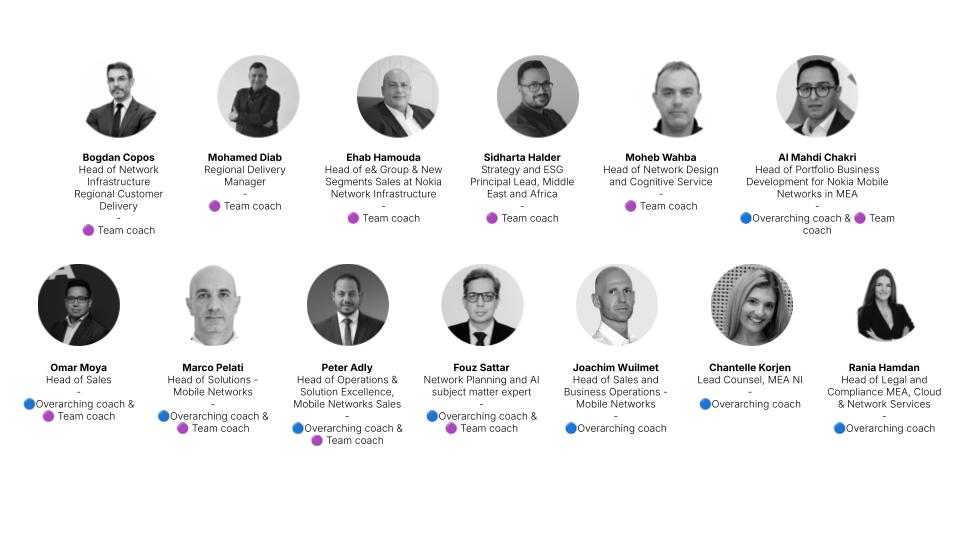
13 amazing coaches from Nokia supported all the teams…
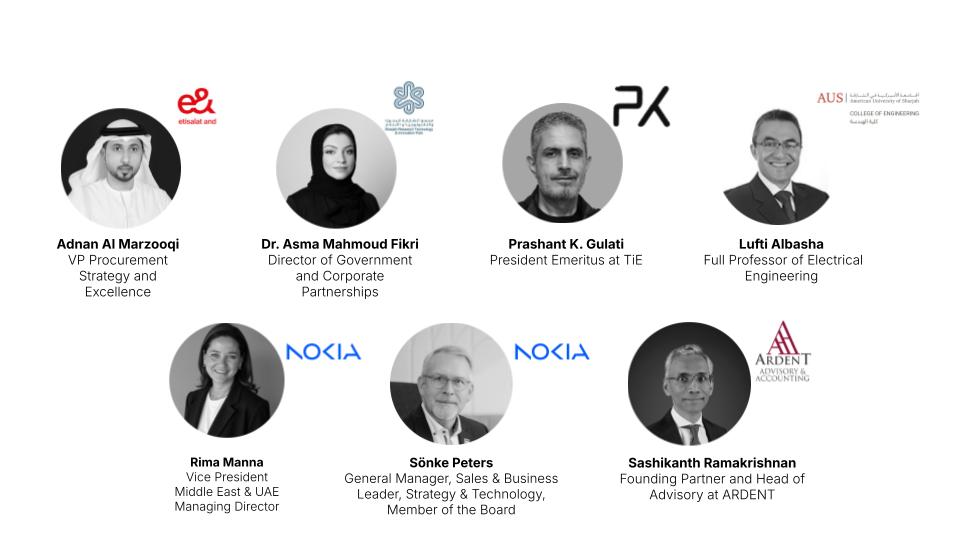
…and 7 high-caliber Jury Members evaluated the ideas:
5. The Catalocity challenges
Participants could choose between three challenge tracks:
5.1. Challenge 1 - Quality of Life powered by AI
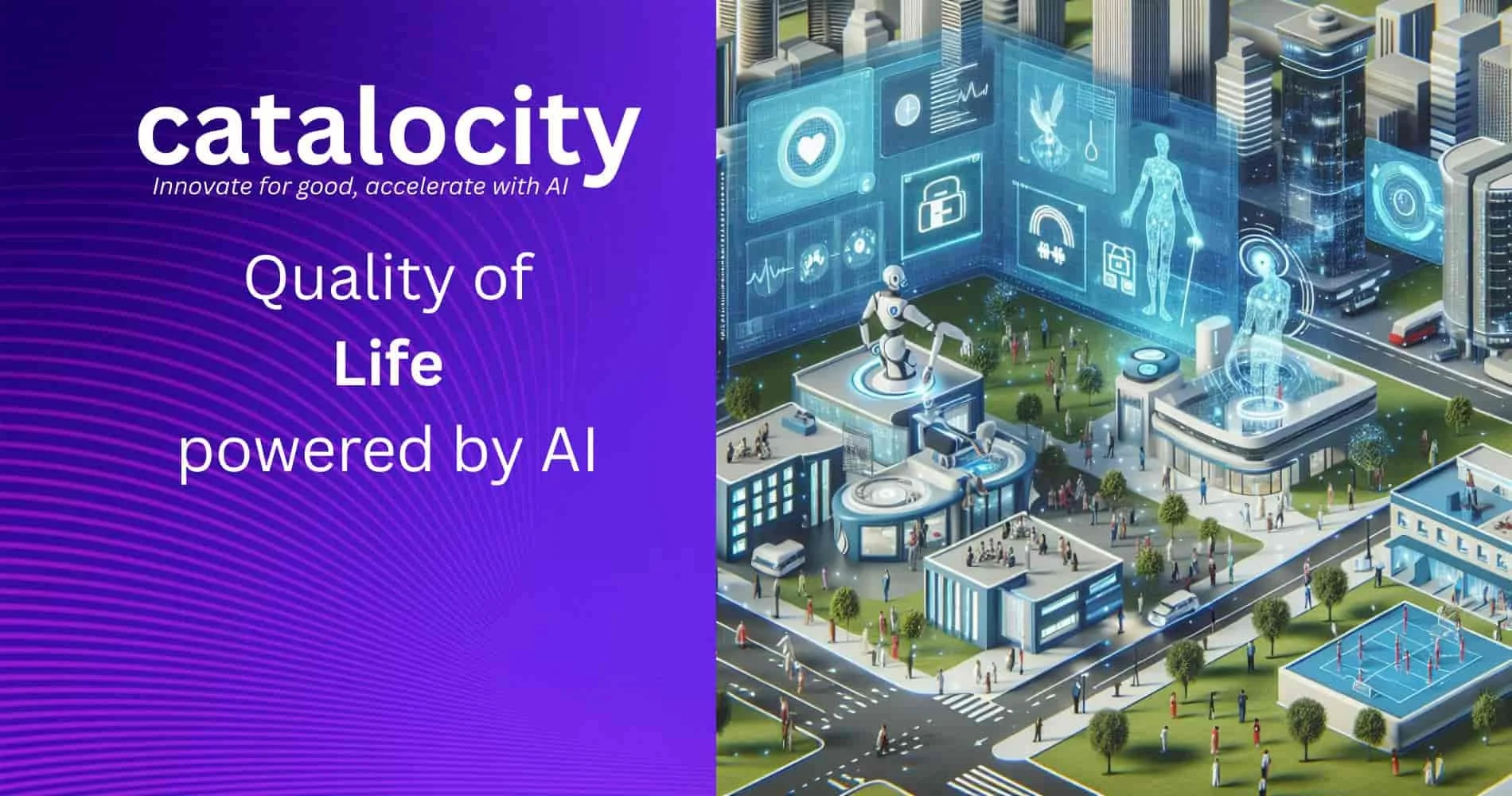
This challenge focused on developing AI-powered solutions aimed at improving well-being, happiness, family life, and urban living.
Participants explored ideas connected to predictive analytics, personalized services, smart planning systems, AI assistants, and monitoring platforms aligned with the UAE National Strategy for Wellbeing 2031.
Teams were encouraged to create solutions capable of integrating with telecom providers to improve the quality of life for UAE residents through smarter and more connected services.
5.2. Challenge 2 - Quality of Environment powered by AI
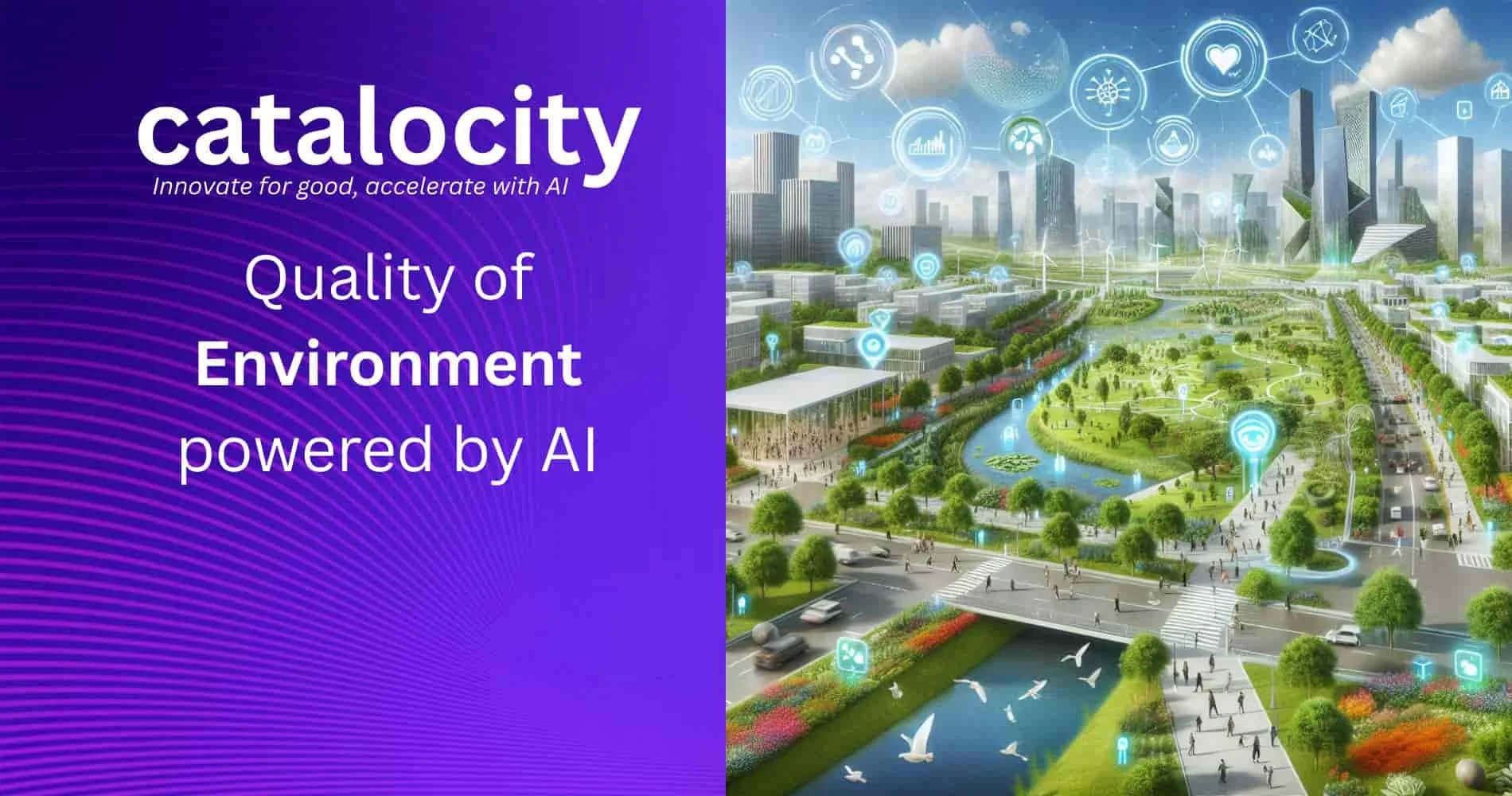
Challenge 2 invited participants to design AI-driven platforms addressing environmental sustainability and resource optimization.
The teams explored applications related to air quality monitoring, water conservation, waste management, biodiversity protection, and energy efficiency.
Participants leveraged AI technologies to monitor, predict, and mitigate environmental challenges while developing concepts capable of integrating with telecom infrastructures to support a cleaner and more sustainable future.
5.3. Challenge 3 - Quality of Communication powered by AI
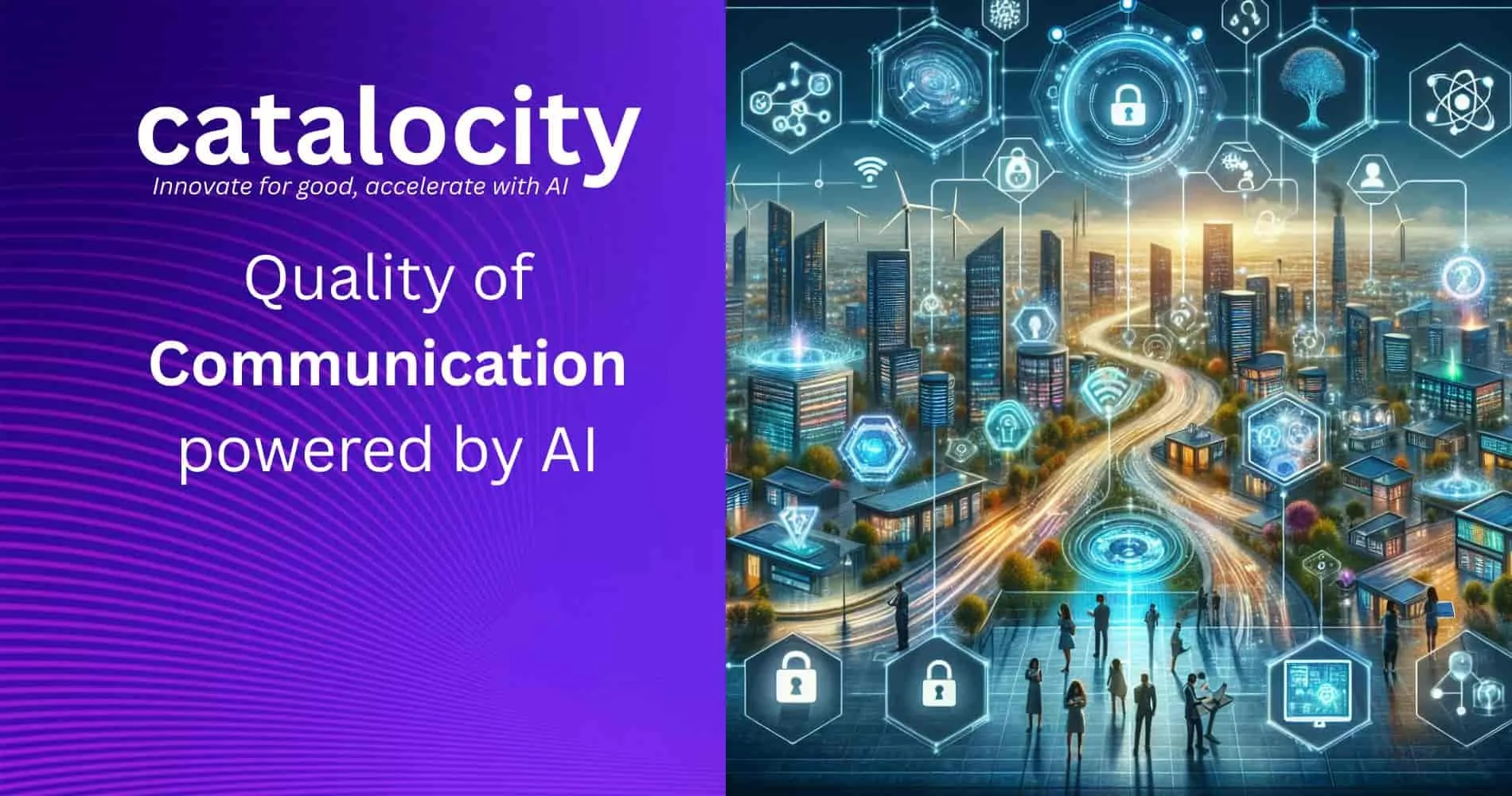
The third challenge focused on enhancing communication systems through artificial intelligence and telecom innovation.
Participants explored solutions connected to telecom optimization, 5G and IoT integration, cybersecurity, accessibility tools, multilingual communication, language translation, and smart customer support.
The goal was to design inclusive and intelligent communication platforms capable of improving digital accessibility and communication quality across the UAE.
6. Agenda and timeline
The Nokia Catalocity Challenge followed a structured multi-phase innovation journey spanning several months.
Registrations and team formation opened in November 2025, allowing students time to connect with potential teammates and begin shaping their ideas.
Throughout February, participants attended virtual sessions designed to introduce the challenge structure, provide guidance, and support teams in refining their concepts.
The event then progressed through multiple innovation phases, including idea validation, prototyping, testing, and evaluation, before concluding with the final pitching session and award ceremony on 20 May 2026.
Below is the full timeline of the challenge:
| ✅ Registrations and Team up phase starts! – 21 November @ 9:00 am GST |
| ⭕ Registrations and Team up phase ends! – 6 February @ 11:59 pm GST |
| 🎙️ Virtual session 1, on 11 February @ 3:00 pm GST |
| 🎙️ Virtual session 2, 27 February @ 4:30 pm GST |
| ↗️ Ramp up and fit phase – 27 February @ 5:31 pm GST |
| 🚩 Deliverable 1 deadline – 23 March @ 1:00 pm GST |
| ✍️ Deep down into the idea phase – 23 March @ 1:01 pm GST |
| 🚩 Deliverable 2 deadline – 10 April @ 1:00 pm GST |
| 🛠️ Prototype and 📊Test phase – 10 April @ 1:01 pm GST |
| 🚩 Deliverable 3 & 4 deadline – 29 April @ 1:00 pm GST |
| 🧑⚖️ 1st Round of Evaluation starts – 29 April @ 1:01 pm GST |
| 🧑⚖️ 1st Round of Evaluation ends – 17 May @ 5:00 pm GST |
| 🎉 Pitching & Award Ceremony – 20 May @ 9:15 am GST |
7. Winning teams
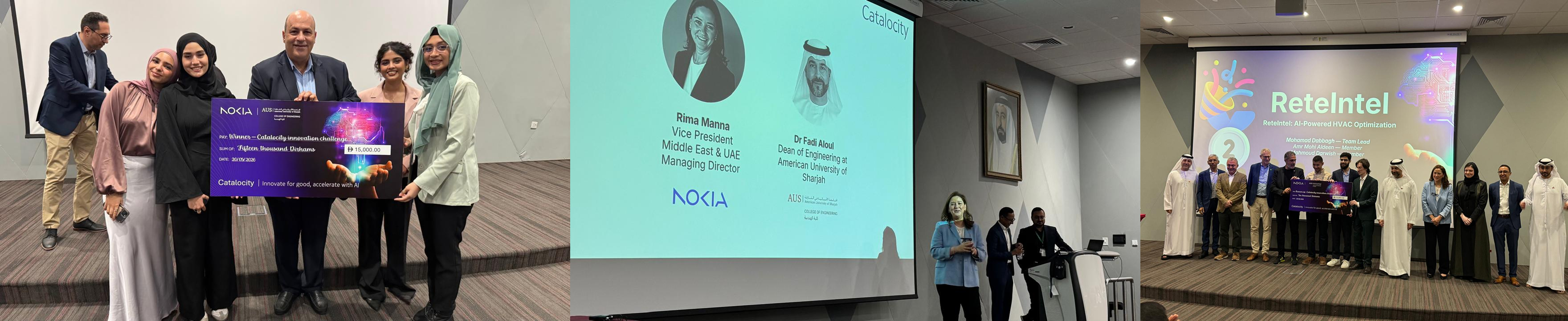
Out of the 31 participating teams, only 5 finalist teams advanced to the final stage of the Nokia Catalocity Challenge.
Here are the finalist teams and their AI-powered solutions:
🥇 1st place
- Team name: The Bloom Buddies
- Idea name: Bloom Buddy
- Challenge: Challenge 1 - Quality of Life powered by AI
- Coach: Ehab Hamouda
Bloom Buddy is an AI-powered smart gardening app designed specifically for the hot and arid climate of the UAE. Many residents struggle to keep plants alive, often leading to wasted water, resources, and reduced motivation to adopt sustainable gardening practices. Bloom Buddy addresses this challenge by leveraging artificial intelligence to provide personalized plant and care recommendations tailored to each user’s home environment. The platform analyses factors such as local climate data, sunlight exposure, soil type, available space, and individual watering habits to recommend plants most likely to thrive under UAE conditions. The application also includes smart watering and care trackers that automatically adjust reminders during extreme weather conditions such as heatwaves. Additionally, users can upload photos of their plants, enabling the AI system to detect early signs of dehydration, disease, or stress. By reducing water waste and encouraging urban greenery, Bloom Buddy promotes more sustainable living while helping both beginners and experienced gardeners successfully grow plants adapted to the UAE climate. |
🥈 2nd place
- Team name: ReteIntel
- Idea name: ReteIntel: AI-Powered HVAC Optimization
- Challenge: Challenge 2 - Quality of Environment powered by AI
- Coach: Mohamed Diab
HVAC systems account for more than 75% of building energy consumption in the UAE, yet many still operate using disconnected and inefficient control systems. ReteIntel developed an AI-powered retrofit solution designed to optimize existing HVAC infrastructure without requiring equipment replacement. The system uses smart sensors and gateways to monitor air conditioning systems in real time while coordinated AI algorithms optimize performance to reduce energy waste and maintain occupant comfort. The solution integrates directly with existing building systems through BACnet and IR control technologies, enabling seamless adoption for facility managers. At the time of the challenge, the team was already conducting pilot deployments to validate the technology in real-world conditions. By making energy optimization accessible for existing buildings, ReteIntel contributes directly to the UAE’s sustainability objectives while creating scalable environmental impact across commercial and residential sectors. |
⭐ Other finalist teams
- Team name: Waste Warriors

- Idea name: WasteRate
- Challenge: Challenge 2 - Quality of Environment powered by AI
- Coach: Mohamed Diab
WasteRate AI is a producer-focused sustainability framework designed to encourage environmental responsibility at the earliest stage of production. Rather than relying on physical product scanning, the platform analyses detailed product specifications, including ingredients, manufacturing impact, material usage, and lifecycle efficiency. The AI system evaluates products across several dimensions, including Innovation and Production, Health and Society, Resource Protection, Carbon and Climate Action, and Lifecycle Efficiency. The framework is designed to support potential regulatory enforcement while helping manufacturers identify opportunities to improve sustainability performance. Consumers are presented with generalized sustainability ratings, while detailed analytical reports remain accessible to producers, balancing transparency with industrial confidentiality. |
- Team name: Inclusivity
- Idea name: BayaanAI
- Challenge: Challenge 3 - Quality of communication powered by AI
- Coach: Marco Pelati
BayaanAI is a communication platform designed to support children with autism and Down syndrome in the UAE who experience difficulties with verbal communication. Unlike existing communication applications designed primarily for Western audiences, BayaanAI incorporates culturally relevant visuals and multilingual support adapted specifically for UAE families. Children can communicate by selecting familiar images connected to their daily lives, such as local foods, cultural items, transportation systems, and places of worship. The application then translates and vocalizes the message in the preferred language of the listener, whether Arabic, English, Tagalog, or others. The AI system also learns each child’s communication patterns over time, gradually predicting intended phrases and improving personalization. BayaanAI aims to provide a more inclusive and culturally adapted communication experience for children and families in the UAE. |
- Team name: ZeroG
- Idea name: ZeroG
- Challenge: Challenge 3 - Quality of communication powered by AI
- Coach: Bogdan Copos
ZeroG developed an AI-powered cybersecurity solution designed to protect users from rogue cellular towers and fraudulent mobile network activity. The project was inspired by growing concerns around fake telecom infrastructure and mobile signal hijacking incidents. At the core of the solution is a mechanism called Continuous Proof-of-Tower (CPoT), requiring cellular towers to continuously authenticate themselves before devices establish or maintain connections. If a tower fails verification, the connection is automatically rejected. The platform operates across 2G, 4G, and 5G infrastructures while remaining compatible with different telecom vendors. The AI component detects abnormal network behavior, suspicious signal activity, and inconsistencies between nearby towers, enabling real-time threat identification. The system also enables privacy-preserving collaboration between devices, allowing shared threat intelligence to strengthen collective cybersecurity defenses across telecom networks. |
8. Prizes
The Nokia Catalocity Challenge offered a total prize pool of AED 50,000 to reward the most promising AI-powered solutions.
All five finalist teams received AED 5,000 in recognition of their work and achievements throughout the challenge.
The 2nd team received an additional AED 10,000, bringing their total reward to AED 15,000.
The winning team was awarded an extra AED 15,000, for a total prize of AED 20,000, recognizing the exceptional quality and potential impact of their solution.
9. Conclusion
The Nokia Catalocity Challenge demonstrated how AI-focused innovation programs can empower students to transform ideas into practical, real-world solutions.
By combining interdisciplinary collaboration, structured innovation phases, mentorship, and industry engagement, the challenge created an environment where participants could experiment, learn, and develop impactful AI-powered concepts addressing important societal and environmental challenges.
The event also highlighted the value of connecting academia and industry through innovation-driven initiatives.
Students gained hands-on experience working on real challenges while developing technical, entrepreneurial, and collaborative skills that extend far beyond the competition itself.
Through the support of Nokia and the American University of Sharjah, the challenge successfully encouraged the next generation of innovators to contribute to the UAE’s rapidly evolving AI ecosystem.
At Eventornado, we support organizations in designing and managing innovation challenges, hackathons, and startup programs through end-to-end operational and strategic support.
From event design and participant management to mentoring coordination, live sessions, evaluation workflows, and final reporting, we help organizations create engaging and impactful innovation experiences at scale.
If you are planning your next AI challenge, university hackathon, or innovation program, get in touch with our team today!

More articles by Eventornado
Are you looking to run a hackathon on Eventornado?
Request a demo, and we'll have you set-up in no time.
Request a Demo